It beckons. Face it unflinchingly, having forgiven all.
T
Yesterday I found myself in Brooklyn visiting the cemetery which is now home to my parents and grand mothers (my grandfathers have no graves to call their own. They are resting somewhere between Berlin and Kiev along with millions of others)…. Many of the graves in the oldest part of the cemetery are all in Hebrew with the exception of the year (1924, 1929, 1934.) This part is also sprinkled with newer graves where Hebrew and English meet( Hanna Rozengarten beloved mother and wife, בת דוד שמואל, 1919-1968. ) Then finally graves from the Russian immigrants, adorned with laser etched images of the departed, presumably at their zenith of health and vitality but in many cases one should hope not. The dead don’t get the right of editorial approval. The newer Russian emigre head stones are covered with with a mixture of English, Russian and Hebrew ( Zoya Greenvald 1945-2001 Возлюбленная жена и мать, לנצח בלב)… Compared to the older graves they seem more fluid, shaped in myriad ways but few resembling rectangles. The stones are more often than not black, polished to a high shine, seemingly alive but gaudy and overly artistic in the most banal way, with all the subtlety of Eastern European conspicuous consumption. They are build as if someone wanted the gravity of death and the permanence of the grave to be polished clean and smooth.; to freeze the person in a state in which they aught to be remembered. Maybe a reflection of their personality….but more likely a reflection of the bereaved desire to commemorate the dead with enough bling to show the neighbors you care.
My paternal grandmother(Feyge Ortenberg ) has the all english stone… My maternal grandmother and mother, (Genya and Sima) resting side by side have the Russian, Hebrew, English Variety. My father…has non. The last part is a story in and of itself.
If Feyge was brought back to life she would not be able to read her headstone. She spoke virtually no English and rarely read in Russian, Yiddish or any other language, a skill she passed on to her son. She would not know that the words on her grave marker were ” Beloved Wife, Mother, Grandmother, Great Grandmother.” And had a stranger walked by and told her what the words say, I cant imagine that she would not wonder if “beloved” was there by accident. She was tolerated at best by her husband, son, grandchildren and great grandsons. But mostly she was avoided. Yet another story.
Roughly a hundred years of living testimony of the changing world on the edge of Bensonhurt, Brooklyn is etched into those stones. The movement of various Jewish communities from the early part of the 20th century and the influx of Russian Jews throughout the 80’s is printed in on every gravestone. Thousands of graves reflecting the tastes and mores of those who settled in and around Brooklyn.. The appearance of flowers on graves replacing the traditional practice of leaving a small stones on the marker, the growing number of laser etched faces staring at you from beyond the grave, the Sterns, Horowitzes and Rabinowitzes now sharing their corner of the earth with Sakolovs, Tsitskins, Tekashvilis tells the story of immigration, success and migration of the Sterns to better cemeteries in the suburbs.
I got lost on the way to my grandmothers grave… The last time I saw the grave was in 1986 at the unveiling of her monument.. and judging from the number of rocks placed by visitors, 1986 may have been the last time anyone has visited her grave. The price for being merely tolerated, i suppose.
In my search for her grave I began to pay attention to her neighbors. Born on X date, dead on Y date, marital status and any major contribution to the propagation of the species duly noted. Some had monuments, some plaques and some mausoleums. Most were beloved or at least thats what the marker would have you believe. Not one of them told you a thing about them; what they found funny or tragic, what excited or frightened them, how much they loved, hated, suffered, punished others. Their greatest personal achievements or struggled were no more apparent on their graves then what their favorite flavor ice cream happened to have been. I knew nothing about them but what their grave stones wanted me to know…. non of which is a measure of a person…
Here lies so and so Beloved (neglectful) mother Beloved (tyrant) father Beloved (ungrateful daughter) Beloved ( disappointment of a ) son Beloved (shining example of a ) mother Beloved (compassionate) father Beloved (grateful daughter) Beloved ( genius of a ) son
I walked around and looked at names trying to decide what adjective or descriptor would apply. Feyge looked beloved by all signs….she was not.
It was then that it occurred to me that the yawning grave, who’s toe hold on each of our lives is a certainty (and a terminal one at that) does not care about the adjectives you place before your name. While life is deeply unfair in its gifts and equality of opportunity, the grave is a true believer in the equality of outcome. The cost of the headstone nor its grandeur is of no consequence to the occupant of the grave.
It was then that I realized that I know scant more about the people I encounter daily then their headstone would teach me. There’s a police officer, an office worker, a grave digger, a business woman. Their uniform is their grave stone… you read it without modifiers… they are strangers, no different than my grandmother’s cemetery neighbors.
“Hi. Who are you? “ I’m John. Im in sales, I’m married with kids… I am John… ” beloved husband, father, friend…ect”
But you dont have to know me to know that.. you’ll find that on my headstone when you get lost in cemetery one day. But while I’m out of the yawning grave ask about me. Because I will ask you about yourself. Its the only time I have. If I wait, i’ll just get a synopsis….and not necessarily a true one. So make your story interesting…..or at least kind and honest.
Yehoshua said: Make for yourself a Rav ; acquire for yourself a friend; and judge every person on the positive side.
It’s a Jungle Out There
Of the many inexplicable things about my parents relationship perhaps the most puzzling was their view on books. I scarcely remember my mother not having a book in her hand. She read at breakfast, during her commute to work, at night as she wound down. She brought books on vacation and would read for hours as a time while she sunbathed her way to melanoma . She would even bring a book onto an air mattress and float out into the Black Sea to read. Considering she did not know how to swim, this was perhaps one of the few times she should have left the book (and herself ) on the beach. She read fiction and nonfiction. Classics and modern literature, translations of authors from around the world. She read Tolstoy, Bulgakov, Lermontov and trashy romance novels. She bought and borrowed virtually any book she could get her hands on. In the first year or two after our arrival to the US it was difficult to find Russian books, but she managed. Nothing would stop her from reading.
The polar opposite was true for my father. I have never, in the 40 odd years of having known him, ever, seen a book in his hand. Not even an instruction manual. No one was going to tell him what to do not even the manufacturers of whatever product he just bought. He knew how to read but preferred not to do so. He never asked my mother what she was reading, showed only derision towards me when he realized that I gravitated towards books and generally seemed completely and unashamedly bibliophobic. Books seems to be his kryptonite and he avoided them at all costs. Instead he preferred television. His favorite shows were the 1980’s detective genre. To him Magnum P.I. and Hunter were the hight of western civilizations contribution to the arts and the The A Team was his Dostoyevski. In some respect this tells you every you need to know about their relationship with the exception of why they ever tied their fates to each other.
I often wondered how and why these two people, who over the course of their marriage wound up with so much disdain for each other, ever got together. I’ve yet to meet a person who’s ever said ” they are so good together.” Was there a chemistry between them to which I was not privy given my late arrival on the scene? Was there something different in the wooing Aron which was dead in the provider I knew? Some unseen gentleness which withered after the vows were said and reality set in? Had the wooed Sima been so preoccupied by feelings that she could not see for whom those feelings grew? Did they change as people in the same way my own personal growth caused, in part, the dissolution of my marriage? It is far too late to ask those questions. They are both gone.
The first book I clearly remember being read to me was The Jungle Book by Joseph Rudyard Kipling. The book fascinated me. I was no older than 5 when my mother first read the it to me. I was always transfixed by her reading. She sat on my bed and read the story in her velvety voice. She spoke the names of Bhagera, Baloo, Mawgli, Raksha, Akela. Strange names which evoked a far away place with a familiar sense of alienation. I had the vision of Bhagera, sleek and sly, as i imitated the beast during the day chasing Asta, our Alsatian. I wanted to be the panther. I loved the strength of Akela, the leader of pack, powerful and wise, strong and cunning on his rock surveying his pack. Later in the second jungle book Akela fights along side Mowgli to the bitter end. I always wanted to look at my dad that way. But like in the story, father wolf was a minor character and when I tried to think of father as Akela, his face would morph into Shere Khan, the tiger. Perhaps it was my fathers near constant roar.
It was much easier to envision my mother as Raksha, Mowglis adopted mother. Both were loving and protective but fierce when the need arose. My mother bared her fangs and fought violently against an attacker who assaulted us as we were coming home one dark night. Her gentleness, the blanket under which I felt all the possible warmth of the universe, was no where to be seen that night. She hit the drunken man who tried to grab her with furious violence, willing, like Raksha, to defend her son with her life. She pushed me towards the entrance of our apartment building as she faced her attacker. She struck him as hard as she could several times until he, in a drunken state, fell backwards. I was confused but within seconds she was at my side pushing then pulling me towards the entrance. We never spoke about that incident. Perhaps to keep the Soviet crime statistic low.
She also never wavered in stepping between my personal Shere Khan and I when his anger at and frustration with me would elicit murderous shouting and name calling. She never shied away from a yelling match with my father whenever he tore into me, typically over something frivolous. While his ire was ever present, he reserved the worst scoldings to accentuate my emasculation.
He would, on many occasions, invite me to participate in some handy work which needed to be done. I suppose given the gulf in our temperament and interests, this was his way of reaching out. The first few minutes would fill me with elation. Here I was with my father ready to help him with a manly chore. Almost without exception that elation would quickly turn to dread because I would be asked to complete a task for which I was neither trained nor with which I had any experience . “ Here, bang this nail in” or “here is a brush go paint that” that was the extent of my instruction. Invariably my attempts would fail. But there was no gentle redirection or encouragement. My failure as a man must have been seen by my father as an affront to his own masculinity. And just as I was feeling small and useless in my own failure, deflated in my inability to complete what my father clearly thought was a task a moron could handle, the loud words came tumbling end over end into my ear . “Durak, Kazel, Baran, Tupoy, Predurak,” The tool would be snatched away from my hand and I was sent to mama with all the frustration and disgust a lifetime of disappointed fathers breathed into his voice.
Mama’s response was white hot fury. She would unleash a loud verbal assault at my father. Parrying every jibe, every insult hurled at me. She would scream at the top of her lungs for him to leave me in peace and stop saying these terrible things. “who speaks that way to a child… their own child!!!!!!” I took no pride or solace her defense. I would have gladly taken more verbal abuse if they would simply stop yelling at each other. My ineptitude not only ruined the project but obviously my parents marriage.
I hated my personal Shere Khan. But I feared the jungle without him more. The idea that mama and papa would separate scared me more than all the insults put together. As far as I was concerned this was normal and not so bad. After all, things were worse for others. My Shere Khan never hit me. He never tried to eat all of me, just my soul.
Perhaps its mere coincidence that this is the first book which I remember being read to me. Perhaps I remember it because in some ways parts of this story resonated with me throughout life. Like Mowgli, I never felt the sense of home. Of belonging to a pack. The perennial outsider, I was the youngest of all the cousins, the tallest of all my classmates, the gentlest of all the boys in the yard, least mature than all my kindergarten playmates, more interested in the feminine that all the boys I knew, more introverted than a boy was expected to be and lonelier than I wanted to be. Mowgli fought for and got his acceptance of his pack. I, instead, chose to leave the jungle. My initial exit was not physical but rather the rejection of every thing which tied me to my pack. My parents aided me in this unwittingly.
For some unexplainable reason they sent me to Yeshiva Be’er Hagolah who’s pedagogical efforts were squarely aimed at lighting the lord’s truth in the embers of Soviet Jewry by making more Orthodox Jews . While deeply non religious my parents sent me to a school which eschewed the more esoteric and spiritual forms of Judaism for the constraining confinement of orthodoxy. This was not the ethereal, wispy Judaism of the reform who are more concerned with the sense of the community than with the literal interpretations of archaic laws of Moses, nor was this the middle of the road conservative judaism which startles the fence between hard line orthodoxy and its reform distant cousin. No, this was the no electricity on Shabobs, can’t wear linen and wool in the same garment, the only reason we don’t kill adulterers is because the temple is not standing, separate meat and milk dishes, don’t touch the opposite sex, TV and Radio are the tools of the devil, we are better than everyone, Judaism.
By day I was subjected to the never ending rules and regulations of the talmudic faithful being explained in all of their tedious detail. With barely any real command of the english language, I was taught to read and write the Abrahamic texts, say the prayers and adopt the customs of the Chosen People.
The plasticity of the human brain is impressive. It allows for a child of 9 to absorb and process the simultaneous acquisition of multiple languages while also learning mathematics, history, science and the Pentateuch. What it cannot do well is deal with the cognitive dissonance of learning about the wages of the sin of eating “traif” at school and being served pork chops before homework.
My confusion grew because I had no way of reconciling Judaism which I knew with the one presented to me at school. My judaism, the one everyone I knew practiced in the USSR (and now in America,) consisted of a few speciality dishes our regular celebrations. Gefilte fish and Kishke were the Jewish accouterment at the celebration tables next to the cholodetz ( gelatinized pig trotter) and pork roulette. If that did not make you jewish what did? We even used fresh carp for he gefilte fish like Moses’ wife must have. The fish would spend a few nights in the bathtub awaiting their contribution to our Judaism.
There were words like Pascha (passover) and a lot of Yiddish spoken in the house. Most of it when secrets were told. I only learned the fun Yiddish words… Drek, Gey Kakken… Our Judaism refereed to non jews as Chazer ( pig), our judaism referred to our brethren as lantzmen, our judaism prevented us from getting the best jobs and got us called Zhyd.
But this new Judaism I was being taught was prayers and no cheese on bologna sandwiches, it was women teachers with covered hair and endless groveling in front of god, reading backwards with dots under letters, 24 hours without television, songs I did not understand, getting my foreskin removed, men wearing shawls and boxes on their heads, waving chickens around, throwing bread at water, holidays that lasted for 7 days. It was overwhelming. But it was also not of my pack and as such it made it more attractive than anything else. I needed little encouragement to embrace it. I just needed a teacher.
Rabbi David Riess was the first teacher who told me that I was smart. To him smart meant that not only was I able to pick up reading Hebrew quickly, I was also grasped the concepts he was trying to teach. He saw that my mind was quick and hungry. I soaked up knowledge and ideas, especially funny Jewish ones. I grasped the meaning of the text and was able to quickly articulate the spirit behind it. I connected the dots and soon did not even need them under the Hebrew letters.
Rabbi Riess was a man who suffered no fools. An imposing 6’3” with a thick beard and large frame. He spoke with authority but not of the rabbinical high and mighty type. His voice boomed. And he said “fogetaboutit” better than the Italians. His physical presence was as intimidating as my fathers. Even more so.
He knew his audience, young lost kids just arriving in the United States who had no concept of what a Jew was. He was an all American kid who believed in the sanctity of his god and the righteousness of his cause but without an ounce of expectation that his students would feel the same, for now. But he demanded your respect for the Torah and God. He demanded and got the respect for the word of the lord. He knew how to crack a joke and make fun of the other Rabbis in the school for being too zealous. He knew bullshit from a mile away, and called it out. The bullshit of students who didn’t care and the bullshit of the administrators who did not understand their student body. He valued intellect and integrity and exuded both.
The Rabbi cared about his students first and foremost. He cared about their souls. He genuinely believed that it was his solemn duty to connect with the students and give them an ounce of the Yiddishkiet he knew to be the true path of the Jew. He had no expectations that his students would become themselves Rabbi’s, but if they knew the what to do in a shul, if they knew how to put on Tfillin, if they said the Shema, then he would have done right for the lord. I have known his man for 40 years and he he walked the walk. His righteousness is as undeniable as his humanity.
One day he sat down with me to learn the Chumash (Pentateuch) and was impressed by my ability to learn and recite the biblical stories. As I sat next to him he put his hand on my shoulder and said “You’re a really smart kid.” And for the first time in my life I felt the validation I had been searching for from a man. I found my Akela. His customs were strange but I would leave my pack to join his, if not physically yet, then culturally.
Our accident of birth does not make us true siblings.
Sweet Sororicide
The Old Testament attests to myriad horrors we visit on one another. The broad index of mans inhumanity ranges from expelling a woman with a young child into the wilderness at a jealous spouses request to wholesale genocide of rival clans, beasts included. It always struck me odd that I was taught in Yeshiva that god’s mercy was bountiful. The evidence for this is scant. It seemed to me that the lord of hosts was more interested in meeting out the severest form of punishments, threatening the damnation of future generations and sanctioning genocidal vendettas rather than doling out mercy by the pound. At best, the old testament is evidence of god’s penchant for highly selective pity and measured forgiveness. The catalog of human crimes starts early in the Bible with the first two true humans bathed the ground in blood.
Contrary to common misconception, Adam and eve were not the first true humans. They had no human progenitors and as such the best they could be is a protohuman couple, a blue print, beta versions. They had no parents and thus we’re not subjected to repeat their parents failings. They never watched their parents make terrible mistakes which would impact their lives in ways big and small. They never saw their parents argue about money or infidelity. They never saw examples of words said in anger, they never feared a parents death or felt abandonment. They never had the misfortune of becoming their parents, neurosis and all. Their only parental figure was an intangible spirit who’s only guidance instructed them to stay ignorant of the ways of the world because they were more special than all other creatures. Perhaps their parent figure was a well meaning and over protective proto Jewish mother who doled out guilt and shame for all transgressions.
The very first pair of actual humans, version 1.0 if you will, were siblings who resolved their differenced trough death by bludgeoning. Anyone who’s have or been near children are not surprised by this. The only surprise is that it took them so long to do it. Having four children I have seen on occasion the viciousness siblings can display towards one another, especially when they think parents are not watching.
The other non surprising thing about Abel’s death is the reason for the Cain’s sudden homicidal urge. The details of the relationship between the archetypal brothers is not delved into very deeply in Genesis. We know some facts. Cain was older than Abel but Abel did a better job in his presentation to the lord. God told Cain to put a little more effort into it and Cains response was to beat his brother to death with a stone. We are not privy to the conversation between the brothers, but there is very little doubt that at some point Cain, the first born, may have said “ It was so much better before you came along and ruined everything.”
There are many apocryphal stories which have been spun around this first ever fratricide. They are all conjecture, which makes mine is just as valid, I suppose. I think Cain slew Abel not because he was jealous of his brother’s superior offering, but because Cain did not understand how parental ( or god’s ) love works. Cain must have assumed god had a finite amount of love and saw Abel as the thief who,without permission, snuck into Cains world uninvited and took 1/2 of the all the love available in the world. The only logical way to fix this was to make the loathsome interloper disappear. Cain wanted to annihilate every trace of the vile invader who shined brighter than himself in the eyes of the only being who mattered. Cain did not see gods rebuke and admonition to strive harder, review his own failings, reflect on the his own lack effort. Instead, he felt robbed of the totality of available love and in a rage he beat his brother to death with a rock.
I’ve seen Cain’s rage personified in my 3 year old first born, by all evidence a gentle soul, pushing his newly adopted 13 moth old sister down the three steps of the sunken living room soon after her intrusion into his world. Perhaps my parents saw that same rage in my sister when they brought me home form the hospital.
As sisters go I would have preferred Goneril for whom I would have gladly played Regan to her lead, to share some common cause, even had I known of the treachery to come. But I do not recall a time when we had common cause. So Cornelius to her Goneril I became.
There is a picture of the two of us as children. She is sitting on a sofa with me positioned precariously on her lap. We are both looking up at the camera. I am not older than three which would make her no older than 10. She has a broad but closed lip smile on her face, right hand holding my arm, her bent left ear poking out of her hair. My countenance is more reserved and pensive. Her arm is draped over my shoulder and around my neck. We are frozen in a gauzy black and white moment in time when taking a picture was a deliberate act of intention to hold the moment for posterity and not a spontaneous expression self absorption. I’ve looked at that picture a thousand times, and perhaps through the filter of the years of bitter enmity since it was taken, or perhaps because it was true even then, I always feel her smile to be a sneer and her arm about to lock into a deadly choke hold.
Jewish families of the USSR, perhaps necessarily given the political and cultural circumstances in which they’ve found themselves for centuries, are secretive. We speak in hushed tones of many things including hopes, auspicious events, finances, infidelities, pregnancy, illness and death. In my early teen years learned through such hushed tones that when I was born my mother shared the hospital room with another woman who immediately after giving birth relinquished parental rights to her newborn son. My mother nursed both newborns and was prepared to take us both home when my almost brother’s birthmother changed her mind. Perhaps the wrong newborn was brought home to my sister and she never quite learned how to love the one she got.
I don’t know if my sister and I were ever close. My arrival changed her world. She was seven when I was born. She, the only child in the family, had seven years in which to be the center of familial love, which upon my arrival had to now be shared.
Perhaps she blamed me for my fathers infidelity roughly around the time of my birth. I have no memory of those events and by the time the tones were less hushed, the events seemed ancient history. History best left unstudied, I was told. But some small parts of the history slipped past the silence.
There as a woman, who also had a son. Papa was going to leave mama for her but changed his mind, perhaps because of guilt or the new obligations of support due to my birth. Perhaps my sister implored my father to stay, if not for her sake then for her new baby brother. Perhaps that argument’s logical conclusion, when analyzed by an 11 year old girl, gave birth to the realization that he was willing to leave her but not me. Perhaps it was how my father’s decision to stay had changed him. Maybe he was kinder before I was born, maybe he had hope and therefore yelled less. Obligations, after all, are not nearly as good a kindling for loving bonds as one would like.
Perhaps it was my weak constitution as a young child, contracting meningitis and nearly dying, my the experimentation with hair pins and 220 volt sockets which also nearly killed me. Maybe it was all these things which took my mothers attention away from my sister. Or maybe it was the simple truth that I was my mothers son and she was her fathers daughter, pure distillates of two personalities which never should have been in the same room let alone a marriage. The concentrated and thickened reduction of everything our parents ultimately learned to hate about each other, poured into a broken pot that was our home, left to cook on high until years later, in a raging boil, it was simply inevitable that we would never speak again.
Our 7 year age difference was not uncommon in Soviet families. Very little thought was given to the impact age differences between siblings with resources constraints being what they were. Seven years is a lifetime between siblings. If maturity levels are factored the chasm gets even wider. I simply do not have recollections of us spending time together. I’m sure we had, but I cannot reach any moments of significance or familial intimacy. The moments I do recall are either comical or painful.
As preparations for her 12th birthday party were conducted, I had made it a point to tell all of my friends that on May 1st I was having my birthday party. I was born in January, so my parents were quite surprised to see several friends of mine at the door with presents for me in hand. I came clean and confessed that this was indeed not my birthday party, but my half Birthday party. I don’t recall my sister’s reaction, but there were definitely some tears.
When I was seven I contracted lice. My head was quickly shaved. It took hours for my mother to comfort me and make me feel human with the shaved head. Until my sister brought her friend to look at the Auschwitz outpatient in our living room. Then another one. And another one. I wanted the gas chamber to make it stop.
Those are the two best memories I have of our 8 years together in the USSR. All the other memories are simply of my sister being with her friends, our cousins and as soon as she was old enough her boyfriends.
With in two years of our arrival in the United States, by the age of 18, she was married. With a year of that she was pregnant. As immigrants are apt to, she moved into the apartment next door to ours. There were fights, accusations, recriminations, disagreements, silences, threats, tearful reconciliation, shouting, yelling, lawsuit threats, business dealings gone awry, joint investment, vacations, more pregnancies and poor parenting. All of the things that an 18 year old should be spared and a 11 year never wished to witness. Trough all of it I continued to soak up my mothers energy and my sister that of my father. Concentrating our parental essences.
Thirty years later my father battled stage 4 lung of cancer as we battled over his care. He lived in Florida with poor health insurance, no savings to speak of and his second wife. He and I recently reconnected after nearly a decade long silence. I tried to the best of my abilities to give his last days some peace and she, in her own confused way which undermined every one of my efforts and made everyone’s life incredibly difficult, tried to do the same.
In our ways we wanted to give some honor to our father. To repay him. I needed to repay his bravery and tenacity which moved our clan to the United States. A feat I can’t imagine myself doing. Without which I would have non of the things which make my life meaningful today. My debt was not paid out of love not even of respect. At least not for him. If there is place we go after we die and if there is even a minuscule chance that I will have to look my mother in the eye , she will know that despite all of the pain my father has caused me, all the humiliation, despite all the rage he inspired in me, and despite every cell in my body wishing to abandon him in his time of need, I did no such thing. I did my duty as a son. Perhaps without love, but with the honor my mother would expect of me and in the best interest of my dad. I even found a few kind words at his poorly attended funeral…
My sister also wanted to honor her father and she did. By being as obstructive, punitive, petty, loud, aggressive, accusatory, dismissive and narcissistic as he could have been at his absolute worst. Perhaps I’ll tell that story one day. For now, it’s enough to chart the origins of our disconnected accident of birth.
When he died, she coerced (or conned or blackmailed or threatened depending on how you view it) his pensioner widow cover the astronomical cost of flying my father’s corpse to New York, where all but I were invited to the funeral. She could not, as she said, accept her dearest “papachka” to lie in the ground so far away from her, where no one will ever visit. This was 7 years ago. The funeral long past gone, the vodka finished after the funeral, the mourners no longer there to watch her tears. It’s been 7 long years and my father rests in a Brooklyn Cemetery without so much as a name plate on his grave.
/People talking without speaking/ /People hearing without listening/
The Art of Silence,
When I was in Yeshiva I made it a point to ask every Rabbi what Gehenim (Ashikanizisized Gehenna, no relation go Gena) was like. The concept of hell is much more clearly defined by the Christians than the Jews. Christians devoted enormous energy to the the articulations of the architecture, leadership, bureaucracy, administration of and qualifications by which one would enter hell. The book of Revelations gave us hell’s CEO and administrative commission, Dante walked us through its various offices and departments while Jheronimus Bosch gave us a detailed illustrative map of the activities within.
Jews on the other hand don’t have a very well defined articulation of Gehenim. There are a no mentions of it in the Old Testament and while there are references in some tractates of the talmud and other sources, by and large, hell is an abstraction merely referenced but never fully explored.
As a young yeshiva talmud (student) I was often curious about the wages of sin. Of the 613 commandments in the old testament, 365 are negative (as in “DO NOT”) the rest positive, (as in “DO THIS”.) They range from sublimely prophetic of my later experimentation with N,N-Dimethyltryptamine , “Do not go into trances to see the future” (Deut 18:10 ) to the banal “Do not eat fruit found on the ground”, ( Lev 11:42) which my children break every apple picking season . I was alway curious of what happens post mortem if you break the commandments.
In some cases god is very prescriptive in the Bible. Eating bread on Passover will have your “soul cut off from Israel”, while any number of sexual and “moral” improprieties will have you stoned, beaten, thrown off a cliff or burned with molten lead. In other cases there is the clear prohibition or instruction but not a corresponding consequence for the violation thereof. Add to this a trillion and a half rabbinical statutes to which an Orthodox Jew must adhere, all of them carrying the risk of sin, and according to tradition, are as binding as the word of god himself. These rabbinical prohibitions and laws ranging from eating chicken and milk together to women covering their hair, are indeed sins. Extremely grave ones if you are in the orthodox part of the Tribe. Surely then, if one breaks such laws some punishment is met out when the mortal coil is finally shuffled off un-atoned.
Being a curious and precocious yeshiva boy, it was very natural to ask my rabbis “what happens when I die if I sin in life?” The answer would vary according to age and Rabbi. Responses ranged from the generic “ god will punish you” without the asked for specificity to the almost Christian “ you’ll burn in hell.” There were, however, two answers which actually resonated with me.
The first was told to me by Rabbi Nate Segal in 9th grade. Rabbi Segal was not a my Rabbi but rather a young rabbinical student who was a leader in NCSY ( National Congress of Synagogue Youth, an orthodox youth organization which tried to expose Jewish teens to American Orthodox Judaism). He was instrumental in helping me shape my Jewish identity. He was an incredibly charismatic man who coached our high school basketball team. He exposed me to new ideas and treated me with respect, something sorely needed in my life. More importantly he used to listen to Howard Stern in the car. That made me my hero, a religious Jew who had a sense of humor which echoed my own. More on him at a different time.
When I asked him about Gehenim he told me the allegory of the long spoons. Attributed to Rabbi Chaim of Romshishok, the parable describes hell as a group of people seated at a banquet table filled with every conceivable nourishing delight. Each person at the table is outfitted with a elongated spoon(or fork or chopstick) too long to feed themselves. In hell, it is said, people are so selfish that they cannot/will not cooperate to feed each and thus starve.
This struck me as more of an indictment of man than the infallible justice of an omipotent god. Certainly this would apply to people who’s sins are those of selfishness. But it really did not explain why this punishment would be justified for those who’s sins are strictly between themselves and the almighty. Surely if you ate shellfish it did not mean that in the after life you would suffer by acting selfish.
The second explanation was given to me by Rabbi David Riess. My teacher, mentor and father figure. (Much, Much Much more on Rabbi Riess at a different time. ) When I asked him what Gehenim was like, his answer made all the sense in the world to me. What he said was palpable, real. It was a hell that I had experienced first hand. A hell expertly weaponized by virtually every member of my family against each other and against the world. There were no pitch forks or devils, no fires or elongated utensils. This was a real hell I knew.
“Gehennim is the absence of god. His silence when you need him the most. You see, when you die the first thing that you see is how beautiful and incredible god is. How being in his Schina ( presence ) is in itself the reward for all your hard toil of keeping his laws and suffering on earth. Peace fills you. His voice fills your heart with unbelievable joy. Once you see and hear god’s presence you will want to be in it for eternity. Just then, as soon as you know the beauty of god, you are judged and your sins are weighed. And the punishment for your sins is that the Schina goes away and god stops speaking to you. The pain of having something that incredible taken away from you is hell.”
There were two primary modes of communication in my childhood home, silence and screaming. Neither one actually communicated anything but were ever present.
The 7 of us lived in a small apartment in Kiev, small by US standards, lap of luxury by those of Soviet Russia . The Ortenberg clan were my parents, Aron and Sima, my older sister Maya and my two grand mothers, Feige (paternal), Genya (maternal) plus Asta, a stunning jet black Alsatian.
Space, even in the new construction at Kharkiv’ky Shosse 16, was at a premium. My maternal grandmother shared a room with my sister, seven years my senior, while I shared the living room/bedroom with my parents. Grandma Feige had her own room.
To my memory, there was never discussion about why I did not share Grandma Feige’s room. Her domain was exclusively hers and while I had no say in where I slept, I could not be happier not to have slept in her room. While the rest of the house was beautifully appointed by Soviet standards, well lit and airy, Feiges room was a tomb. My memories are faint but they are not without their share of dark images. On any given day and at any given time, Feige could be found in her small dark room brooding by the dark curtained window. No matter the weather, Feige was bundled up in a house coat, in thick stockings, slippers and a shawl. Her wrinkles creased on her face when she spoke. I don’t know if they did so when she smiled because, as a child, I always turned away from her when she did. It simply frightened me. It was the grin of a toothless lunatic.
She took most of her meals in her room. She never came out with the exception of using the bathroom or to cook something for her self. I do not have a single memory of her in at Kharkiv’ky Shosse, 16 which did not occur either in her room or in the kitchen. She never stepped foot into the living room. She never left the apartment. She had no books or television in her room and I never saw a newspaper. To the best of my recollection she just sat there by the window rotting. I do not mean that word metaphorically. In addition to her agoraphobia she also had acute hydrophobia. In the 17 years I knew her, I was aware of her taking 2 baths. The first right before we emigrated in January of 1979 and the last after my mother threatened to move out of our Brooklyn apartment in 1984 if my father did not make her bathe. At times she smelled so unbearably rancid that I would hold my breath as I passed her. The irony of her death ii 1986 is that she stumbled while washing her hands, hit her head on the sink and flooded the apartment below.
I do not wish to be unkind to Feige. I do not know her story. I also am keenly aware that my view of her may not be complete and may be exaggerated as it is from a vantage point of a child. What I do know is that she lost a husband in WWII and never re-maried, raised a son, my father, in post war Ukraine. I do not know what she suffered in her life, if that suffering contributed to her condition. I do know, first hand, the ravages of mental illness and therefore loath be anything but compassioate. But the compassion is an adult’s prerogative. As a child, she terrified me.
And so we lived. My parents, like everyone else, working hard to support the family, my sister at school and I spending lots of time with Grandma Genya’s cleaning and shit stirring and and Grandma Feige’s rot.
There was always a silence in the house. The silence was not the meditative kind which I seek on my meditation pillow on a daily basis, these 40 years later. Nor was it the silence of contentment and peace when all the kids go to bed and a husband and wife listen to the house settle in. It was the silence of 6 people living in a house where half of them never uttered a word to each other. A sickening silence steeped in ignoring each other and pretending the other person does not exist. It was the silence which uses a 5 year old intermediary to deliver verbal telegrams of sink availability and cooking being complete. The silence for which the 5 year old messenger can’t help but feel responsible, though its roots were so much older than the child himself. This silence stank. Literally.
I do not know the origin of the row, but for years, as many as I can remember, Genya and Sima did not talk to Feige. Oddly, I also remember that sometimes that silence extended to other members of the family. There were times when mother and daughter did not speak to each other. Other times husband and wife did not speak to each other. I do not mean just the lack of communication, I mean no words were exchanged. Simply silence punctuated by “ go tell your father….go tell baba Genya…”
Silence was a weapon. A targeted ICMB at the heart of the offender launched after brutal verbal assaults were exchanged and exhausted. Those antebellum skirmishes, the ones that led the silences, each had their flavor. Between my mother and grandmother those silences were typically preceded by Genya saying “ But what did I say?”… What she said, more often than not, was simply everything that was non of her business. What she typically said was aimed at my father and more often then not meant to stir things up between my parents. Sometimes I thought that saying things which would infuriate my father or exasperate my mother was her personal form of entertainment.
Between my parents, the antecedents of silence were my fathers coarseness towards people, his proclivity to embarrass my mother in public, his inevitable move towards viciously mockery of people when he felt inadequate in their presence or his razor like barbs aimed at humiliating or emasculating me.
But the the nuclear winter of all silences raged noiselessly between my mother and Baba Feige.
These two women shared a home and hearth. Lived within 25 feet of each other and did not exchange so much as a word for years. I have vague memories of my mother trying. Words like “ Feige, please. Just come” are a faint hintergedanken not quite reachable by the conscious mind. But more often than not, there was just silence between them.
( This is not to say my mother was not at fault for continuing this Cold War. My mother, about whom I have volumes to write, but have thus far been unable to because I must wade past the image in my mind of her as a saint so that a real picture emerges. I do not wish to beatify her into a caricature.)
I do not, nor do I wish to, know the origin of their row. I suspect it’s banal. But there are two poignant moments which stand out. They are either the symptoms of Feige’s mental illness or her desire to escalate the Cold War into a hot one.
The kitchen was the 38th parallel in the military action between my mother and grandmother. They never occupied this DMZ simultaneously and for the most part treated the no-mans-land as a shared space with the respect it deserved. On one occasion, however, Baba Feige launched an attack which launched my mother into a state of vocal shock and bewilderment and me into the bathroom nearly vomiting.
Baba Feige would periodically bake. While Baba Genya made my absolute favorite “Medovic” ( honey cake) Baba Feige would make what I used to call “ No thank you, I’m not hungry.” I never recognized anything she cooked or baked as familiar or frankly meant for human consumption. For what ever reason, Baba Feige decided one day that she was going to make something special. She announced to me that later that day I will have Napoleon!!! This indeed was something special. Napoleon, the scrumptiously sweet, delicate and sophisticated desert was a treat we rarely had without company. And my recluse and scary personal Baba Yaga ( witch) was going to make it for me. She spent the day preparing this dish.. when she finally presented it to me I was excited. Sure the pastry part was no where near as thin as I’ve seen in at other occasions. But she more than made up for it by the enormous amounts of creme between the layers. She cut me a slice, gave me a fork and instructed me to dig in. No need to tell me twice.
Subconsciously, I knew something was wrong long before my tastebuds did. Perhaps the coloring was off or the texture was not what I was used to. Or perhaps even at 6 I knew that Baba Feige had no clue how to make a pastry as complicated as Napoleon. All those subconscious hints came screaming to vile consciousness the instant the Napoleon landed in my mouth. The sweet pastry simply could not over power the giant gobs of mayonnaise she used as filling. I ran to the bathroom to spit it out unable to reconcile the expectation of the creamy custard and the realization of oily mayonnaise drowning each tastebud in its vinegary deluge.
My mother was simultaneously apoplectic and laughing hysterically once she found out why I was in the bathroom. To my surprise this did not result in shouting but rather my mother, incredulously and kindly explaining to Baba Feiga that mayonnaise is not the filling for this particular desert. It is at this point that Feige picked up the fork, cut a piece for her self and said “ I like it.” and took a bite, enjoying every second of it. The silence resumed.
The second episode which broke the status quo of the 38th parallel also ended in silence, but not without its share of screaming.
To this day no one know what Feige was doing or why. But while the rest of the family was out of the house, Feige decided to cook. No one knows what she was cooking but it smelled, and I assure you this is neither an exaggeration nor fabrication on any level, as if she was boiling a vat of human feces. The entirety of the house smelled like a latrine on a the hottest August day in the middle of New Orleans. The stench hit us with the force of Anola Gay’s payload. Never, not even when I decided to decorate my mothers new lacquer bedroom wardrobe with a nail, had I heard my her scream so loud or curse so much.
If the kitchen was the 38th parallel, the lessons learned on either side of this mini Korean War were honed over time into guerrilla tactics which would dominate the internal relationships in and around our family. Not speaking to people became an art of war deployed for one reason or another, over the course of our time as family for periods sometimes lasting 10 years. Sima did not speak to Genya, Genya didn’t peak to Aron , Feige didn’t speak with anyone, I did not speak to my father, my sister did not speak with my mother, my mother did not speak to my brother in law, I did not and still do not speak to my sister and my mother did not speak with me.
It is the last one which taught me that hell, as Rabbi Riess explained it, was real. Of all the enmity, derision, anger, violent yelling, cursing, shouting, accusation, whispered damnations between the adults in the family. Of all the emasculating, insults and embarrassments which roared from my fathers lips in my direction. Of all the vile things we all said to and about each other in anger… nothing hurt more than the absence of my mothers voice. And its silence after her death.
Memories tell the sweetest lies, if you care to listen.
Speak Memory,
Childhood memories are notoriously unreliable. They are filtered through the gauze of time and emotion. Some memories are in fact nothing but concoctions, representations of stories which have told so many times that a movie of them has to be made, if not by Hollywood then by the mind itself . I have one such memory. I am in my pram, our loyal German Shepherd , Baykal, is barking aggressively at my mother. She can’t come near me and I begin to cry. This is not a real memory. It feels completely real, visceral almost cinematic. The cinematic quality of the memory is precisely why it cannot be real. Real memories loose the color and texture of the moment, they are palpable not in the detail but in the emotional state they arouse. This memory of Baykal the valiant defender, the prams white lace trimming, the loud barking and snarling, my mothers face consumed with worry, he red lips moving, telling the dog to go away, yelling for my father, is not real. It could not be real because a thousand times, at a thousand gatherings by a thousand members of my family I was told that it happened when I was about a year old.
As the story goes, Baykal took a liking to me from the moment I was brought home from the hospital. So much so, that when my mother made a gesture which the dog interpreted as threatening to his little human brother, he began to bark and snarl and would not allow my mother to get anywhere near the pram. This obviously became an untenable situation and my fathers beloved dog had to be given away. Perhaps this was the seed of enmity sown between my father and I. My father was forced to trade a prized and fierce show dog for a son who, unlike the graceful and powerful canine protector, clung too close to his mothers skirt, like a ever smiling Pekinese lapdog, a breed my father loathed.
My first realization that childhood memories are distorted images of real events happened in 2006. I was in Moscow on business entertaining clients. A young man who worked in our Eastern European division sat next to me. As the evening progressed my Swiss and American clients were curious as to how I was fluent in Russian. I told them that I was born in Kiev.
“ You’re from Kiev” said the young man, “ so am I. Where did you live?”
“Kharkiv’ky Shosse, 16. Apartment 24”
“Oh my god. This is the strangest thing. I live at Kharkiv’ky Shosse, 18”
The odds of this are absolutely astronomical. After a few minutes of speaking about the coincidence I asked this young man to send me a picture of the building in which I gew up. It turned out to be nothing like I remembered.
Kharkiv’ky Shosse, 16 was not the first place I lived, but it is the first place I recall vividly. Situated on the west side of the busy thoroughfare the building, a gleaming white 6 story edifice is separated from the road by a hundred or so meters grass. The side facing the Shosse ( expressway) is technically the back of the building. This was where the balcony of our 4th floor apartment faced. The entrance to the building was on the west side. There was a courtyard, typical soviet design with benches, and a smaller building with a sloped roof ( if memory calls a cellar of some sort or a bomb shelter in case the evil Americantzi attacked) positioned on the west side of the courtyard. Directly to the west of the Kharkiv’ky Shosse, 16, behind the courtyard was a kindergarten, behind which another complex of buildings which had a small adjacent orchard.
If you were to exit Kharkiv’ky Shosse, 16 and travel south for a block you would see a complex of apartment buildings, number 18, a longer but slightly smaller building with its own courtyard. Taking a south eastern turn you would quickly see a large soccer pitch with a hill overlooking it, and if you continued down that path and made a turn north you would be at School 31, where in 1978 2nd grade teachers not only taught you how to read and write, they were also experts in identifying enemies of the state.
Our apartment was on the fourth floor. The landing was long and had 5 to 8 apartments on it. The furthest from us lived Aunt Maya and her son also named Gena ( Aunt as in respectful way Russian children refer to adults and in this case not a blood relative.) Between our apartment and Aunt Maya were several others apartments, one of which was occupied by my friend Sasha and his parents. As you came up the landing and made a right there were two doors. Ours was numbered 24. Entering the apartment you walked into a long corridor which terminated with the big balcony ( a fire escape really). On the left was the living room, which doubled as my parent’s bedroom and which I shared with them. My bed being a small pull out couch. Our other balcony was accessible through this room. Further down the hall and on the left was our kitchen. Followed by a small bedroom where Grandma Feige lived. Across from her was another bedroom with two beds, one for Grandma Genya and one for my sister, Maya.
The description above is all from memory with 40 years of gauze, childhood trauma and romanticism. But this I remember as an architect remembers the first building they design. All these long 40 years later I can navigate the apartment and the complex of buildings, school, hills, kindergarten as well as I can navigate the block on which I currently live. I know that my memories are correct because after committing them on paper, Google Maps confirmed virtually all the details of the neighborhood, save a few buildings which look new. The memories are correct but all the details are missing. I do not remember the color of the walls in the apartment, or the benches in the courtyard or the school, if there was grass on he pitch or not, what the roof material was on the small building in the courtyard. Not one of those details remain. I remember this place because of the moments I associate with each part of the mental map.
I remember the the grass between the building and Shosse because it was where I was told by the the the brothers Misha and Sasha from the first floor that I was stupid and can’t play soccer with them. I came home was was soothed by my mother who told me that they were just older and that I was definitely not stupid. I remember the balcony because on a freezing night my mother stood in a flowing night gown, lace curtains drifting like ghosts in the air, while my father begged her to come in. She kept kept turning away from him and I was shaking silently, less from the cold than from fear that they would divorce. I remember the entrance to the building because on late autumn night my mother and I were attacked by some drunken lunatic who tried to grab my mother and pull her away from me. She fought fiercely, with a violence I could not have imagined in her, picked me up and ran towards the entrance as the man stumbled and fell. I remember the courtyard because it was where Pavel and I were sitting on the bench and he told me that he was born because his “parents fucked” a long time ago. I listened intently not knowing what “fuck” was. But later in the day in the same courtyard on the same bench, after I lost a game we were playing, I yelled at Pavel “ ….AND I DON’T BELIEVE THAT YOU WERE BORN BECAUSE YOUR PARENTS FUCKED.” I remember the small building with the slope roof because of the day that the Germans finally won the battle in our childhood WWII weekly reenactments and I, a Messerschmidt pilot, small and under the radar, was hoisted to the low roof to celebrate with the rest of the Wehrmacht. I remember Kharkiv’ky Shosse, 18 because in 1976 a miracle of sorts happened. A Ford El Camino was spotted in the front of the building. Every boy in 5 mile radius came to see it. We all speculated endlessly whether it was American or not. I remember the kindergarten because I was the only one who did not know how to tie his shoes and had to do the walk of shame as the last one out to play, shoes tied by teacher in front of everyone. I remember the orchard because a bunch of us kids would steal the apricots and cherries growing there. One day the owner of the orchard lay in wait and attacked us by throwing objects out of a 3rd story window. I was the only one hit. With a klisma bottle ( enima bottle), by all accounts unused, thankfully. I remember the football pitch because after an errand ball I kicked away accidentally from the older boys who then became so infuriated with me that they gave chase. Thankfully an adult passing by saved me from a vicious beating. I remember the hill where sledding one day I misjudged the location of the sled, laid down on its edge, the sled tilting up so violently that it broke my nose. The snow turning crimson. I remember my school because my patriotism was at all time high having been selected to carry the big red flag. I thought I had earned it, but papa pointed out it was because I was the tallest Pioneer in the class. I remember the landing of my apartment where with all the pride of a 5 year old I knocked on the next door neighbors door in my Soviet Sailor outfit with Potemkin written across the front to show her how ready I was for the school celebration. I remember Aunt Maya’s apartment where her son and I ate several pounds of pistachios in one sitting. This caused both lots of laughs for the adults but also lots of constipation for the two Genas. I remember Shasha from a two doors down because we planned on running away at the age of 4 and 5 , but I called the trip off only because he still used a Garshok ( potty ). Carrying it around did not appeal to me. I remember my living room because I accidentally opened a wardrobe door out of which a kneeling Baba Genya was getting something. I heard a loud THUNK, but she said nothing. Her face turned red as a beet but she just kept doing what she was doing. I remember the kitchen because Grandma Feige was cooking something which not only drove our family out of the kitchen, but several neighbors out of their apartments. The smell was terrible, like feces with spices. I remember Aunt Feige’s room because it was dark and scary. I had walked in to tell her something. She had given me a coin as a thank you. I dropped the coin, it fell out of site and she cackled “ be careful there is hole under my bed.” I never walked back in her room. I remember my sisters room the night after the earthquake ( which I slept through) my mother let me sleep in my sisters bed and playfully “tied” me to the bed with scarves so that I would feel safe.
The picture I received from my colleague of Kharkiv’ky Shosse, 16 was a squat grey soviet era building, dilapidated and depressing. It had no soul. A golom edifice, unloved and abandoned to economic reality. A broken doppelgänger of a childhood home. A coffin for old memories. I deleted the picture and kept my memories.
In the summer of 1979, after 9 years of being Gennady Aronavich Ortenberg, thanks to the democratic wisdom of a street football huddle in the Brooklyn Streets, I was baptized and renamed. My new American name was John. I had no idea at the time that John was the Westernized version of Ivan. Had I known, I may have protested. The Ivans of the world had never been kind to my people. Ivans were first in line at the pogroms my grandmother told me about. Ivans most likely shot my grandfather as he was returning from the front where he helped them fight Fritz. Ivans called my father a zhyd and Mrs Ivan proclaimed me a traitor in second grade for the crime of not wanting to be called a son of a zhyd. But I accepted the monicker because I wanted play football with the neighborhood kids. A small price to pay.
John with an H. The real John. Not Jon, short for Jonathan. The kids in the street of Bensonhurst never knew anyone without the H. Jonathans lived in Boro Park or Midwood or maybe on the Upper east side. In Bensonhurst there were Paulies, Carmines and Vitos a plenty, but no Jons. Considering that my name was randomly assigned to me by a group of Italian-American kids with no real ear the subtleties of the Ukrainian pronunciation of Gennady, I think I got lucky with John. I could have just as easily become Geovani, Gugliemo or Giuseppe. Frankly, any one of those is closer to Gennady than John. John made no sense phonetically, culturally or in any other conceivable sense. I’m willing to wager that the neighborhood kids to whom the universe assigned the task of naming me had no clue of the etymology of John ( most likely from the Hebrew Yohanan, meaning God was gracious.) I would also wager that the conversation in the huddle was akin to this:
“ Carmine, what the fuck that kid say was his name?”
“I dunno Vito, I just wanna play”
“So what do we call this Russian prick?”
“Just call him John or Bob who gives a fuck.. But he’s on my team.. he’s tall”
“Fuck you he’s on your team. You already have an extra guy.”
“No… fuck you, Pete sucks its like having a girl on the team”
“Fuck you Vito”
“Shut up Pete”
“So he’s John”
“Yeah.. lets play”
And so I was now the tall Ivan the terrible of Bensonhurst. I had no idea of the rules of football. I lined up on the line… they told me to run. Someone threw me the ball and I caught it. I stood there. Two hands touched my shoulder. Everyone stopped. “ John… when you catch you gotta run, ok”…. “OK”. It took three more plays running the wrong way to learn which way to run.
For a few weeks, whenever the kids played outside, I would come down from our 2nd floor apartment and join them. I picked up the rules of the game faster than the rules of Italian-American kid culture. We were kids and I was a tolerated outsider. I sounded like a prepubescent Russian spy. I was one of the new weird people moving into a neighborhood studded with pork stores, Italian bakeries, pizzerias, old Italian grandmas in black dresses and headscarves, Cadillacs and a population of people for whom the only two vowels of any import were A and O. As in “Ay Oh, fuggetaboutit.”
These kids talked about the yankees, the jets and how much they hated the commies and the niggers. I was pretty sure they suspected me of being the former, and more than fairly certain my dad felt the same about the latter.
This was the general pool of kids which produced the murderer of Yusef Hawkins in 1989. That same year I was called a traitor for the second time in my life. This time by the neighborhood teens because I marched down 20th Avenue with Roy Innes to protest the Yusefs racist murder while the neighborhood people on the sidelines held watermelons over their heads. Or Perhaps my traitorous crime was telling Channel 7 News’ NJ Burkett the obvious. “ Well, NJ, there’s definitely racists in the neighborhood, look at the watermelons” on live tv. This was the same pool of kids who took a baseball ball to me because they confused my colorfully crochet yarmulke with a target sign. But all that was a decade away. In 1979 we were just kids. That summer from the moment I left my apartment to play ball to the moment I came home sweaty and exhausted I was just John. But only till September.
My first school in America was Yeshiva Be’er Hagolah Institute. The name translates to “ wellspring of the diaspora.” It was started in the late 70’s by the Orthodox Jewish community to address the spiritual needs of the Jewish refugees flooding in from USSR. The school was meant as a spring of Torah and Mitzvot from which an entire generation of Soviet jews could satiate their long deprived spirit. Those same Russian Jews who have been stripped of the identity in the pursuit of the communist ideal, the Jews who were denied their birthright of the Shtetl life now can send their children to learn all about their Jewish heritage. But a very specific Jewish heritage. The orthodox heritage. Because after all, if you were saved from political persecution and economic deprivation but you ate pork and drove a car on Shabbat, were you truly saved?
In retrospect, and perhaps I am being unkind, it felt like a cultish land grab for new followers. While organizations like HIAS (Hebrew Immigrant Aid Society ) and NAYANA (New York Association for New Americans) were focused on helping the refugees through the emigration process and provided essential social services, Be’er Hagolah was teaching a generation of young Russian children who were struggling to learn English to read Hebrew and observe Shabbat. It’s difficult for me, all these years later after having renounced my orthodox beliefs becoming deeply secular and atheist, to be objective on this matter. My personal distaste for orthodoxy of any kind certainly colors my world view and my memory. The the kindest interpretation I can muster of the founders of Be’er Hagolah is that they truly believed that the soul of the Soviet Jew was on life support and they were willing to do virtually anything to save it. Even build a school with substandard education. An education which by their standards was focused on the important things. Mainly, weaving a new thread of Jews into the very old cloth of Orthodox Judaism. It was as much an attempt to prevent the assimilation of the Russian Jew into the goyish America as it was a Gymnasium.
My schooling at Be’er Hagolah began in the basement of an existing Yeshiva ( Ohel Moshe) on 80th Street and Bay Parkway. This was an era when a 9 year old child could walk 10 blocks to school by themselves without CPS being called on their parents. ( This may sound shocking to the 27 year old living at home who has yet to adult, but we survived. ) Be’er Hagolah did not have its own building and would not have one for a decade. At the time it occupied several classrooms in the Ohel Moshe building. Over the next several years my school would move further and further away so that by the time I was in high school my commute went from a 10 minute walk to an hour long 3 bus change tour of Brooklyn nightmare.
To attend this new Yeshiva there were three main requirements 1. You had to be Jewish. That is your mother had to be Jewish. Your father could be Ghengis Khan or Farrakhan just so long as you mother was not Shaka Kahn. 2) If you were male you had to be circumcised. 3) You needed a Jewish name.
With hurdles 1 and 2 cleared we were now up to the Jewish name. This is an area where my father was very much ahead of me. His name was Aron. Not Aaron, pronounced eh-ron but Aron pronounced Ah-ron. The Russian pronunciation is virtually identical to the Hebrew. Had he been the one going to Yeshiva, his name would have not changed. But mine was Gennady, which had no English corollary and even less of a Jewish one. This required the Rabbis at the school to get creative.
There are roughly three dozen biblical names which start with G. Most of them are archaic or simply sound like a middle easterner is clearing their throat. These include Gudgodah, Giliad and Gur-baal…These names are not used in the mainstream of orthodoxy. In fact there is only a hand full of names which are used in the American Jewish Orthodox community today. (There are more in Israel, but they are Sephardic names and to the average Yeshiva boy those names might as well be Christopher. ) With the limited number of choices I had to choose from Gavriel and Gershon.
Names matter. They are how people know you. In many cultures names are either description of your personality or a parent’s hope for your life’s outcome. Names memorialize the past and are beacons to which the future steers. In some Native American traditions a person’s name changes over time. They are given a descriptive name at birth which changes to reflect their accompaniments or defining characteristics over time. They may have interim names as teenagers and once they reach adulthood and accomplish more they would adopt a more fitting moniker. If I applied that to myself I would have been Big Ears as a child, Egotistical Asshole as a teen, Without Direction as a young adult, Suicidal Depressive as upstanding member of society and Today I would be Healed Heart by Love of a Woman.
I believe that in some way a person has to reconcile their name with the way they live their life. If you know after whom you are named you either become as they were or rebel completely against it. If grandpa Saul was a saint, then you either strive to for sainthood or embrace sin with gusto. Alternatively, if your name has a real meaning you either fulfill it or its opposite. For example, to be named Chaim requires you to live life fully, because if you don’t you wasted a name. If your name is Deirdre you either fulfill her sadness or strive like mad oppose it.
The meaning of Gavriel is was an angel. His name means “strength of god” it did not sound anything like Gennady. And so they picked Gershon.
Gershon is a derivation or perhaps a Ashkanazation of the Biblical Gershom. Gershom was not an Angel. He was a footnote in the Bible. His only claim to fame is his patronymic. His full name would have been Gershom Ben Moshe. The son of the only man to have been close to the face of God, Moses. Moses chose this name for his son because it commemorated his sojourn in the Tent of Jethro. Gershom means “ a sojourner there.” The next forty years of my life were spent fulfilling the meaning of my name. Being a stranger everywhere I lived and to everyone I’ve loved. The name gave me a superpower; the ability to look like I was home without ever feeling it. I was now Gershon Ben Aron… or to translate to English, A Stranger, the son of a Narcissist.
Children do not listen. They watch. Intently. And they see everything.
The rest of the details of the trip are a fog. The bus route, the clothing I was wearing, what the weather was like… all are a memory blur. A theatrical background view from a thousand miles away. I don’t recall the season, though it could not have been winter, I don’t recall anything else about the day. I only recall the final destination and the shocking interlude on a crowded bus which all these years later I’ve come to connect with the beginning of the realization that not all is what it seems and not everyone is who they seem to be.
Our destination was the pivnetza, a beer hall, though I did not know it at the onset of the excursion. Once we got there I looked up to see my father standing with other men at a high top table. The smell of beer was all around. Fresh beer brimming with foam poured into thick heavy glasses. Some glasses had handles but the smaller ones were thinner and sans handle. The smaller glasses reminded me of the soda machines which dotted Kiev in the 70s. The soda dispensing machines produced two types of carbonated beverage. The first, for 5 kopeks, was a plain soda water, the second , for 10 kopeks, dispensed a very light carmel colored sweet soda water. I don’t remember the taste, maybe artificial vanilla, or perhaps just some sugar added to the carbonated water. ( It reminded me of the “Berozniy Sok” ( Birch Juice) sold by the glass in the local market, whose secret formula, as disclosed by my cousin Misha, was water and sugar. This disclosure ruined the romance of drinking the juice of my beloved white birch tree. )
As a child I always begged mama for a glass of the carbonated sugary beverage when we came across one of these machines. I always wanted to put the coin in and watch the bubbly beverage dispense with a “BLURP whoosh. “ More often than not, the communal glass, which by any modern standards of hygiene or public health would be anathema, was missing. This was always a giant frustration to me. Why on earth would anyone steal the communal glass from the public soda machine? This struck me, a child of 6 or 7 as a serious crime. The perpetrators of which clearly had no decency. It had never occurred to me at the time that the real crime was having millions of people share the same glass.
The other smells : rotting staleness of the beer spilled long ago, more than faint body odor of Russian men who are not seduced by western ideas of RightGuard scented masculinity, and the salty deliciousness of taranka. Taranka, a salted and dried fish, beloved as a snack by Russian people, old and young. It is the perfect salty accompaniment to the pilsner style beer of the Soviet Republics and a delicacy prized by me above all others, save for the occasional piece of chewing gum my mother brought back from her periodic trips to Bulgaria. Gum which was chewed far past its ability to produce flavor.
I stood next to my father trying to pretend that the language used by the men with whom he was speaking was not embarrassing to me. I knew the worlds ‘ Bliat, huy, padlo, pizda.” I knew these words were bad. They were never used when my mother was near. I also knew I was not supposed to repeat them. I learned they were bad not just by the absence of these words in our home. I knew they were bad words because I had learned them all the previous summer in a hospital room, which was my home for a month as I recuperated from meningitis. My roommate, who’s name is lost to memory though my brain screams Seryozha, was on older boy of 10 or 12 who educated the other 2 boys and I sharing the room on the nuances and particulars of the colorful Russian lexicon of the streets. When I returned home after the hospital stay and announced to a room full of my adult relatives and friends in my most adult voice that I loved the “ ебаный салат оливье / Fucking potato salad” my mom made for my return home. It was “ pizdets / the shit”… After the laughter subsided I was told that “you are never to use those words again.” I thought this odd as they were, at that point and to all appearances, the funniest words I had ever uttered in public.
The language my father used with the men was shocking but a welcome distraction to the only other thing I remember from that day. My father and I boarded a bus to take us to the pivnetza. I held his hand as we walked onto the bus and headed towards the rear. The bus was full but not over crowded and we sat towards the rear of the bus. At the next stop a young woman boarded. She wore a dark jacket or dress. There was nothing particular about this woman which comes to mind other than she was young and had long silky hair. ( Young children are notorious for mis-aging people. To the best of my recollection she was somewhere between 15 and 85.) She sat in the seat in front of us and her long dark straight hair draped the back of her seat. As I looked forward I saw my fathers hand gently touch her hair. Without her knowing or suspecting, he thumbed her shiny, silken hair between his fingers, lovingly caressed it with his forefinger and thumb.
The only time in my life I had ever seen my father’s rough electricians hands exhibit any kind of tenderness, especially with the magnitude and intimacy bestowed on this strange woman’s hair, was when he begged my mother to put on a robe as they fought on the balcony of our apartment one freezing night when they thought I was sleeping through one of their endless rows. That gentleness, i knew, even at my young age, was born of guilt. This was not guilt. This was something else. I looked up to see my fathers eyes focused on the woman’s hair. I was an observer, an intruder, to a private moment I could not understand. Not even now as an adult.
The burning in the lowest part of my intestines began to crawl up through my stomach and rested deeply in my solar plexus. It was the burning of hatred, of confusion, of betrayal. It burned because he never touched my mothers hair like that. What did this mean? Why was he doing it? You didn’t touch strangers, certainly not like that. And what about mama… this woman was not mama…was he trying to make her my mama? I don’t want another mama. I have one. A beautiful one. One that everyone loves. The one that I love. Maybe she has curlier courser hair but she is my mama. This was some stranger, a random person on the bus. Did he love this woman? More than mama? I wish he’d die. I wish the hair would wrap itself around his hand and cut it off.. who’s hands are those? My papa never touched anything or anyone like that… maybe the Zaparozhets ( car) he bought after waiting for years or a new set of pliers in his tool box, but never a human being… even Asta, our black Alsatian, got a coarser petting.
Our stop. He let go of her hair and reached for my hand. That filthy betrayers hand grabbed mine and set my arm on fire. I was glad to be getting off that bus. I wanted to be in the open air, I was happy not to watch that hand touch a stranger as if they were lovers. But I did not want that hand on me….I wanted to breathe but could not…. “Everything in order? / Все в порядке” “Yes” “Good, lets go. / хорошо, поехали.” And we walked into the pivnetza. Where I was finally able to inhale . The scent of beer freshly poured from the tap, rotten beer sitting on the floor for an eternity, the sweat of a hundred million drunk Russian men, and the faint familiarity of my favorite taranka..
I stood there listening to my father speak words we were not supposed to say and I hated every thing about him. He was a stranger. Just as much a stranger as the woman who’s hair he caressed with such intimacy and gentleness. I became as estranged and unmoored from him in that moment as any child could be from a parent. I hated him more than then when he made me walk home scared and alone after a devastating car accident because he had to “deal with the car.” I hated him more than when at the age of 10 I read my first short story to my parents only to be mocked as a writing sissy. I hated him more than the day after a deluge of his name calling I wrote “Я хороший / I am good” on the only small personal space in our apartment, the back of the closet where I kept my few personal belongings, just to feel an ounce of self worth. I hated him more then than when rushed me out of my own high school graduation because he wanted to beat traffic. I hated him even more than when, at 17, I found out that he threw away the love letters from my teenage love, the woman who 30 years later would change my life and open my eyes to the peace only her love could bring. I loathed him in that moment…. until he bent down, gave me a small piece taranka… He leaned in, brought the foamy glass of fragrant hoppy yellow colored beer close to my face… as I chewed on the dried salty fish he said “Don’t tell mama” and he let me sip the smallest sip. With that sip all my hatred turned inwards, and I hated myself for accepting my initiation into the silence of Pivnitza.
In some cultures escaping the long shadow of your fathers failings is easier than in others. For Russians this escape is made more difficult by the use of naming conventions, namely “отчество” or patronymics. Unlike in the United States where a middle name is decorative at worst and can be dispensed with, In Russia ( at least the one I grew up in) middle names do not exist. Rather you are known in all but the most intimate of interactions by your name and your connection to your father. Most people, when introducing themselves officially, formally or referring to someone in a professional setting will use the naming convention; First Name, Patronymic, Surname. Gennady Aronavich Ortenberg. In an ongoing professional relationship or official setting you can drop surname name, Gennady Aronavich. In a more casual relationship you drop the patronymic, Gennady. In even more intimate friendships you can use the diminutive form, Gena. And finally in the most intimate and loving cases you get to a further diminutive Genotchka or Genckic/Genka ( little Gena.) The sins of the father are always visited by on the son in this naming convention. A person is always reminded in any official, professional or generally respectful interaction that they are in fact the son of someone. The naming convention never asks you if you wish to be reminded of your most direct progenitor. I would have rather not been reminded of my father so often.
Papa had lots of names which he could have called me. Gennady Aronavich, Gennady, Gena, Genotcha, Genchik , Genka ( or the dozens of cutesy variations in the diminutive)… all ranging from the formal to the most intimate. He could have also called me any of the nicknames I had in my family. Being the youngest of all the cousins I was always referred to as малoй ( little one) or affectionately “longer loksh” yiddish meaning long noodle, as I was a head taller than anyone in my age range at any time and as skinny as a noodle. Instead my father had myriad names he called me instead. The least hurtful were болван,козел, баран (pick a barn yard animal of your choice associated with stupidity)….the most hurtful are best laid to rest in the darkness in which they were concieved.
In this, and many other respects, coming to America was a blessing. A blessing which, despite all his failings, my father gave to me. A blessing I repaid in full nursing him on his death bed. A blessing without which I could not be who I am today.
Here in America there were no patronymics. There were no situations where I was forced to acknowledge my father on official forms or by my teachers. Even more a blessing was the fact that through sheer chance within months of coming to the United States I was christened by the church of the rough Brooklyn streets as John. I had no middle name. No patronymic. I became John Ortenberg.. and soon a בן בית (Hebrew, son of the house/adoptive son) to another man, who despite his silence and harsh stoicism gave me something my father never could, an unshakable sense of right and wrong and a life saving sense of self worth.
This is My covenant, which ye shall keep, between Me and you and thy seed after thee: every male among you shall be circumcised.
Abraham was promised to be a leader of a great nation. All he had to do was leave his fathers house without a map. People underestimate the strength it takes to leave the familiar for a promise of something better. He was not told the exact location, the difficulty to be endured, the risk inherent in the travel or the scars the journey may leave.
None of us leave our fathers home without some scars. Of all the scars left on Abraham, one was deeply personal. Before he undertook his journey, god insisted on a covenant between them. This was no simple terms of service you click through without reading. This covenant was much more personal. The divine plan established for Abraham included risking the very organ needed to accomplish the task of being the father of a great nation. This is not to be taken lightly. Of all the things god asked of Abraham, circumcision was the covenant bond. This expression of submission to the lord, who in return promised to elevate the barer of this deepest of scars to a direct connection to the divine and the creation of a great nation. This covenant required a man to take the knife to his personal holiest of holy. Abraham consecrated his member, gave it divinity and set himself and all his male progeny apart from the nations of the world. I have to imagine that this practice raised a lot of eyebrows in pre antibiotic Middle East. Not just for its obvious danger to the health of the human end of this covenant but because, well, frankly IT HURTS. A-lot. Really. ITS THE PENIS CRYING OUT LOUD!
Mind you, Abraham was not an 8 day old boy. He was a grown man. Moreover, he did it himself. Even stranger, there were no medical books for the procedure so success of this first of its kind operation was not nearly as guaranteed as one would hope. But successful it was. And so was Abraham.
He left his fathers house, undertook a perilous journey in which he nearly lost his wife, did lose his nephew Lot and nearly sacrificed his son to the cause. But the reward for fulfilling the hero’s journey was worth it. We know that god kept his promise because the vaccine for polio was invented, e=mc2, History of the World Part 1 was made, Chigall’s The Kissing hangs in the Guggenheim, and Oppenheimer captured the power of the sun. His children may not be as numerous as the stars in the sky or sand on the beach, but their impact touched all of humanity and continues till today. So perhaps it was worth the price of such a deep and painful cut.
When Abraham’s children who toiled under the yoke of the Sickle and Hammer were given the chance to flee their fathers homes, they gathered their belonging and left. Like Abraham, the path was not clear, the challenges daunting and fraught with danger. They left to pursue freedom, economic and social, at great personal cost. They left with the scars of the Tzars pogroms and Stalin’s purges and gulags. They left with scars of the destruction of their culture and the day to day humiliation of the casual and not so casual anti-semitism that permeated the USSR. They left with the same uncertainty of the promised land, the same fear of failure but unlike Abraham many of their men left with their foreskins intact.
I reached the promised land precisely the way I was born. Tonsils, appendix and foreskin intact… The way that god and 4+ billion years of evolution designed me. I was a spitting image of my father who, thanks in large part to the teachings of another Abrahamist with a bushy beard and an idealistic view of the world, was spared the painful cut to the holiest of holies in the pursuit of the opiate of the masses. Jews in our own skin but with an intact foreskin.
As a child, having seen my father naked, I knew that I was normal.. assuming he was normal. I also happened to catch a glimpse of a few other members of the members of my sex during the first 9 years of my life. By all account, I seemed to have established one certainty pertaining to the my privates; I looked like everyone else. Perhaps smaller and without that awful hair, but definitely normal. It had never occurred to me that there were cosmetic variances to the male genitalia nor that there would be any reason to alter the the aforementioned through surgery. I never read the Bible never saw anyone in the changing room who looked different. As far as I was concerned we all had what looked like ant eaters of various shapes and sized. Done and done.
I also had no real idea of what the purpose of the penis was other than to a) urinate and b) spontaneously stiffen at the wrong time. The worst of these times was when I was on the metro. I am not sure why, but for some reason the Kiev metro would wreak havoc with my erections. This one particular time my family was off on a visit to some relatives via metro when all of a sudden, and for no apparent reason, hydraulics engaged and I had a massive ( by 7/8 year old standards) erection pointing uncomfortably toward my shoes. This was a terribly excruciating. Both pants and underpants were constrictive and there was simply no room for the little Gena to pop into a more reliably comfortable position.
“What is to be done?” The great Tolstoyan question. I was in my Sunday best sitting on a very busy metro car. I shifted and squirmed in my seat. My mother noticing my discomfort asked if all was alright. Of course it was. One does not tell mama about things like this… does one? No…. One certainly does not.
After several moments of writhing in my seat it dawned on me that the current situation can be alleviated if I simultaneously reached into the pocket of my pants, place my hand just underneath my seemingly autonomous member, lean back, stretch out my legs fully and wedge the uncooperative beast upwards.
The plan, like all plans, seemed solid on paper. Like all plans, however, it does not take into account every variable. In this particular case the unforeseen variable was simply the lack of room in the crotch area in my pants to allow for a full rotation of the penis towards the belt buckle. As I executed the move, which seemed so simple and straight forward in my head, I found myself fully reclined, stretched out completely like a plank, with an unbearably visible tent sticking in my pants.
It turns out that I was the 4th person to notice this. The first two were the people who sat across from me. I knew they were the first because the were laughing, very loudly I may add, and I was not sure why. The third person was my mother who, though not someone who typically makes a fuss in public, was yelling “Гена, что ты делаешь? / GENA, WHAT ARE YOU DOING”.. it is at this point that I became aware that I was the fourth person to notice what was going on. Persons 5 -70 will remain nameless, but I felt every one of their 140 eyes on me almost instantly. Luckily for all but me , my mother quickly solved the problem by a) placing her very heavy bag in my lap and b) quickly yanking me by my arm pit and sitting me up. We got off 4 stops short of our destination and presumably the denizens of the Kiev Metro were able to return to their regular and uneventful commute unharmed if not entertained. The next time my penis was the subject of family discussion was just a few years later in the land of giant phallic skyscrapers and with a bushy bearded Abrahamist of Yeshiva Be’er Hagolah.
I have never been able to understand why my parents chose to send me to a Yeshiva. We were not religious. My father had tattoos from the army, we ate pork, shrimp by the metric ton at Beefsteak Charlies, never discussed god or the torah, knew nothing of the prayers or practices and short of speaking a little yiddish and and making Giffilte Fish, were nearly indistinguishable from Ivan Ivanovich Ivanovs of the world. I suppose we they were sold on the idea that Yeshiva would offer a better education, but that neither panned out nor could I reconcile it with the fact that my sister was sent to South Shore High in Canarsie. They simply ignored the public school 247 which was LITERALLY across the street from me and sent me to Yeshiva…
My foreskin, my parents and I sat in the Rabbis Germains office as he explained that the newly formed Yeshiva Be’er Hagolah was going to be of new marvel of education where a young child would learn both the mysteries of judaism and the secrets of the universe. This was going to be a grand exercise of pedagogical wonderment where the soul and the mind would be nourished. A place where the a young jewish mind would be able to learn about its heritage as well all it would need to attend Harvard. This place would save the Jewish child from having to share the school yard with the unwashed and uncouth masses of Americans who would most likely kill said child, if not physically than definitely spiritually.
Be’er Hagolah would be a Gymnasium of the first order… yes there were some small challenged such as the fact the the school was in the windowless basement of an existing yeshiva called Ohel Moshe. Yes, your child would have to walk 10 blocks every day instead of crossing the street to attend school. Yes, the teachers were unqualified and unlicensed. And of course, yes, emphasis would be on making the child an Orthodox Jew and not a free thinker BUT…. Its not public school where drugs were being injected by blacks into every one and Jews were beaten daily. The best part of the school, as articulated by the Rabbi, was that it was a free Private School education. With an offer like that , it would be hard to say no. And so without so much as a thought my parents were excited to give their shy and sensitive young son a private school experience without breaking the bank.
“There is one thing that we need to talk about” said the rabbi. “ Does he have a Bris?”
I had always been a lover of language. I was a precocious speaker and loved hearing other languages. I knew several phrases in Ukranian and even was able to understand my grandmothers when they spoke Yiddish. But I had never heard the word Bris. I was fairly sure that I did not have one only because I had never heard of one. Surely if I had one, someone would have mentioned it by now.
My father, who incidentally also brought his foreskin to the meeting, informed the Rabbi that I, in fact, did not have one. This was of no great surprise to me.
“Well, we are going to have to get him one before he starts the school year. It’s very important. We can’t allow him in the school without one. Here is the number of a Mohel we recommend”
That seemed simple, I thought. We’ll just get me one. I wonder if they are expensive.
“And you, Mr Ortenberg? Do you have one?”
My father blushed a little and said, “ Rabbi, I’m too old to get one.”
This made perfect sense to me. After all my father was done with school and judging from his almost allergic aversion to books I was sure it would be wasted on him.
“ You should think about it… you’re a Jew. You need one.”
“I’ll think about it Rabbi”
“ Papa, mama, what’s a bris” I asked after the meeting.
“Its nothing dear.. just have to go to the doctor and they have to do something.”
“Why do I need to go to a doctor to go to school?”
“Its just something you have to do… it will be fine… it’s like a little operation but it won’t hurt and it’s quick.”
“Papa, why don’t you have it?”
“I’m too old. I don’t need it anymore.”
“Gena,” said my mother. “Its a small operation and I tell you what, when you get it I will take you to the toy store, the one on Brighton Beach and you can pick any toy you want?”
“ I WANT THAT MAGNETIC DART SET.. you know the one I showed you when we went visit Aunt Dora and Uncle Marik? The one with the red white and blue board.. can we go now, please? I love it, please?”
“When you get the Bris. Ok.. I promise. I will bring it to you at the hospital.”
“Can we get the bris tomorrow?”
“ We have to call the man who does it…not tomorrow but soon. I promise”
The nurses at the hospital were really nice. I got lots of apple juice the night before the bris… I think I began to understand to some degree that the bris must on some level have something to do with the penis because while the nurses took my temperature and gave me juice, the doctor who was going to do this bris thing was practically consumed with the mine.
“ Genotchka,” said my mother “ we will see you in a little bit… the doctor will take you to a room and you will go to sleep. And when you wake up I will give you the dart board you wanted”
Fluorescent lights swim by above my head, the wheel of the hospital bed is making a little squeaky noise as it moves down the hall and a nurse is smiling at me. She is pretty. I’ve never been to a hospital like this. Its much bigger and smells much better than the one I spent a month in when I was 4 or 5. I am wheeled in to room, people are speaking to me or near me or at me, it’s hard to judge.. a doctor comes over with a mask. He tells me that he will put the mask on my face I will go to sleep…
“Just start counting backward from 100” he says.
“100, 99, 9 8…..”
I remember my first words after surgery.. they are as crisp and clear to me now as the cry of my first born. They are as powerful today as they were some 40 years ago. Words which rattled in my brain for years and words which I, at that groggy anesthetized moment, hope would ring in my parents ears for an eternity…. “ I DONT WANT THAT STUPID DART BOARD… WHY DOES MY PEESHKA HURT”
The toy I chose was on sale at the toy store on Brighton beach avenue for $9.98. Only the sale of Manhattan was a worse deal..
Post Script: My circumcision healed well and quickly. The first 3 or four days were painful. Especially day 3. I hated the stitches they itched. And they looked weird, like my penis had whiskers just below the glans.
Shortly after my surgery we went to visit Aunt Dora and Uncle Marik. They were wonderful people who had emigrated a few years prior to us. I loved their house. They had two children whom I worshipped as a child. My cousin Ira was the most beautiful woman I ever saw. I would stare at her as if she were a painting. She was incredibly kind to me and I still hold nothing but wonderful memories of her. Her brother Eric was the coolest thing… He was Arthur Fonzarelli who spoke Russian! I wanted to be him. He spoke English with almost no trace of an accent, had a skateboard and PONG. Pong that magical video game I could play for days on end… All I wanted to do was be as cool and as American as he was.
The day we came to see them in their Brighton Beach apartment was going to be amazing. PONG-A-PALOOZA. A song by Andy Gibb was playing when we walked in. My father and I entered the apartment and Eric greeted us. Eric who was a few years older than I had gotten a circumcision in the United States and in the eyes of my father this made Eric ( who was perhaps 16 or 17 at the time ) an expert on all things penis. “Eric, can you take a look at Gena’s peeshka to see if its healing properly”
Eric could not have been nicer. He looked quickly and gave his professional opinion. “Looks great.”
It’s been 40 years, I still have a hard time looking Eric in the eye. Dad ruined Pong forever.
sojourner /n./One who sojourns; a temporary resident; a stranger or traveler who dwells in a place for a time..
For many of us Jewish-Russian emigres the word sojourner defined us. We lived among people of Russia, Ukraine, Moldova, Belorussia, Uzbekistan, Khasakstan but were not of the people. We ate their food, drank their vodka and read their books. We celebrated their holidays and tried as best we could to model our lives after theirs. But in the end in one way or another we were always reminded that we were but strangers among them.
Our last names shouted our difference. We were not Ivanovs but Rabinovitches and Israelovs, we were not Kuznetzovs but Schvartmans and Malamuds. Our identities were stamped on our passports as if we needed to be reminded of our difference. We clung to our ways, tied by the Russified yiddish spoken by our grandmothers, by the gefilte fish sitting next to pork dishes on our tables. Most of us never felt the pain of the pogroms our great grand parents endured, but virtually non of us escaped the being called a Zhyd. Our identities were never Russian ( or what ever republic you were from) we were Jews. Sojourners among the vastness of communisms. The chosen people, chosen to be second class citizens.
On the other side of the ocean “our people” through organizations such as HIAS and NAYANA campaigned for the freedom of Soviet Jews. They petitioned and protested, they organized and fought for their brothers and sisters behind the iron curtain. And while we all must be thankful for the efforts they made, when they finally got the Russians Jews to come to the US they found us to be less Jewish than they wanted us to be and more Russian than they knew what to do with. We ate pork and partied like the Russians. We were educated and were criminals. We became their taxi drivers who used to be engineers and handymen with medical degrees, their nurses and their Russian Mob. We moved into enclaves where the connection to our Judaism was overshadowed by our resourcefulness and love of capitalism. We made conspicuous consumption into an art. And by this nature we were once again sojourners among the very Jews who fought so hard to give us freedom.
How many of us had to explain to our American saviors that there was indeed sunshine in the Soviet Union, that our lives were filled with the same joys and terrors of those in the US. That our judaism was more about sticking together than worshiping in a temple. We came to the US not to become become better Jews… but be free Russians. Some called us Commies. Some called us welfare cheats. But very few called us fellow equal Jews.
And so we went into the broader world but we clung to our ways. A hodgepodge of Judaism, capitalism and Russian(ism). We had our own restaurants which did not resemble what the Americans knew to be restaurants, we had our own shops with food most Americans would run from, we closed ourselves off in our sea side ghetto. We tried to be American but were always reminded that we were not. Maybe we spent too much time reminding ourselves of being different.
The Cold War was still raging in the 80’s and we, newly minted Americans , struggled to know if we should root for the Wolverines or the Russians in Red Dawn. Not all of us were happy with Olympic hockey results of the “miracle on ice.” We spoke a strange dialect of Russified English….we laughed at the stupid Amerikantzi… and we often said “it was different in MY country” as if the USSR had ever truly been our country.
And 40 years later, our children have to be taught about the USSR. Russia is a political punch line to them. We kept our names, but not all of us. Some of us pass for Americans, but we never truly share their world view because we LOVE this country more than any native person can. We cannot take it for granted because we know it is the only place where we could have reinvented ourselves, where our religion is not stamped on our passports and where what we can accomplish is not governed by our ancestry but by your desire.
We educated ourselves, we started companies, we created a culture which impacted the broader American narrative. We gave them Mila Kunis and Sergey Brin. We gave them Yakov Smirnoff and a love of good vodka. We assimilated and we carved out enclaves of Russian Emigre culture which endures.
Those of us who came here as children are still sojourners in many ways, despite our best efforts to become American…
I was a Jew in Russia, I was a Russian in the America, I am still a Jew… A Russian Jew. A breed of its own. And I am the better person for it.
You can become what they say you are…or you can be what you chose to be.
If you had asked my maternal grandmother why your nose is itchy, she would have told you it’s because someone is missing you. Itchy palm? Well, that meant someone owed you money. She also insisted that if you ever mentioned any good news or words of good fortune out loud they must be followed by a quick three spits to ward off the evil spirits. I always found this odd because short of those particular spirits, Babushka Genya never spoke of anything else spiritual.
Genya was not an interesting person. No discernable depth to speak of. In fact, I never saw her read a book or a newspaper, never heard her have a deep conversation, never saw her watch the news or take interest in world, local, regional affairs. Her world was filled with the events of the day, cooking and other people’s business. She loved other people’s business so much that she would treat it as her own. She would worry about people’s business, talk about it, try to impart her wisdom, which was rarely wise and even more rarely solicited, on anyone within earshot. She was a busybody in the classic Eastern European grandmother trope. She knew everything about everyone and what she didn’t know she completely made up with the alacrity of a fiction writer who gets paid per word. She knew everything about everyone, but she chose to know very little of the world. She reveled in her unwise wisdom gleaned from the stove, sewing machine, shit stirrer’s pot and running away from Nazis.
Genya’s life was not easy. I suppose anyone born in Tarascha, a southern Ukrainian village roughly 120KM south of Kiev, in 1912, could make that same claim. Her primary language was Yiddish, and she did not learn Russian until she was in her teens when she, along with her mother, brother and sister, moved from the village into the big city to join her cousins, aunts and uncles. The family scraped by. Eventually she got a job as a seamstress in a factory where she met her future husband Michael, a tailor by trade. As the story goes, my grandfather wanted very much to meet my grandmother but being an awkward youth, he could not figure out how to approach her. One day as she was walking past him he decided to trip her to introduce himself. She fell. He apologized. The rest as the say is history. They had 2 children, mu uncle Naum and my mother Sima. Then June 22, Hitler, Babi Yar, evacuation, Tashkent, news of her husband’s death most likely at the hands of the Soviets after the war, slow return to nothing, rebuilding a life.
She was difficult at times, she created a never-ending stream of enmity in our family… but she was kind to me and loved me very much. She would always tell me that I was the best part of our family. A distillation of all things positive. “A good, good boy with a clean, clean soul.” (or as she would have said “ Хороший, хороший мальчик с чистой чистой душой.”) Her name was Genya (pronounced with a hard G, as in “Gandalf” rather than “generation”, though in the Ukrainian accent which softens the G significantly as compared to the Russian. A distinction which only matters to those who speak Russian with the eye for identifying the uncouth Ukrainians among them) My birthname was Gennady, with the diminutive “Gena.” Same hard G softened by our Ukrainian pronunciation. I spent countless hours with her as a kid. It was always Genya and Gena. (The American equivalent of Julia and Julian or Roberta and Robert to illustrate the point. To most American ears, however, it sounded like that Saturday Night Live skit where everyone in the uber-euro-chic art dealers house is named Noonie. )
Had you asked my grandmother, she’d have likely told you that a person’s name has an impact on their personality. Every Michael she knew (her husband, her grandchild, her cousins), she would tell me, were very much the same. And, according to her, our names were similar and that meant we were similar people. We were both “Good, good people with clean, clean souls.” I never understood this because when it came to personality she and I were so incredibly different that the phonetic similarity of our names surely could not have meant anything at all. I never believed that names matter…but maybe they do.
I was born Gennady Aronavich Ortenberg. The etymology of the first name is from the Greek “Gennadius” meaning generous or noble. I doubt that my parents ever knew that. The tradition in our family is to name a child after the first letter of a deceased relative. And there are few Russian “G” names. I suppose I could have just as easily been Gregory. As it stands, I was named Gennady after my great grandmother, Golda. I don’t know much about Golda except that she had lots of siblings most of whom died at the hands of the Nazis and that she, along with my grandmother, mother and uncle, was separated from those left alive during WW2. While I am not sure where the rest of the clan was, Tashkent was home to Golda and her brood for 4 years.
My patronymic (the Russian middle name essentially meaning son or daughter of) was always strange to me. Though my father’s legal name was Aron, no one ever called him that. He went by Alec. So, when asked to recite my name, I would often use Alexiavich (son of Alexi) as my patronymic only to be corrected. Alexyovich was significantly easier for me than Aronavich (son of Aron). Aronavich screamed “Jew” and while I knew I was Jewish, as a kid being in the tribe was never high on the list of things I was either proud of or wanted to share. This was my first identity. Gennady Aronavich Ortenberg. Everyone used my diminutive, Gena, or (and there are a few people who still do this largely to my pretend annoyance) Genochka, a further Russian diminutive meaning “little Gena “. This is how my family and early childhood friends knew me. I was born into a Jew in a Russian culture. Outsiders in the greater Union of Soviet Socialist Republics. Russian in mannerisms, clothing and tastes; foreigners in faith, jokes and food. Pariahs in political life, marked as such on our passports, reviled as a people; zhydi, kikes. But we were happy and content, connected and well fed, resourceful and frugal. Just your average middle-class Jews in a sea of Russians and Ukrainians.
The DNA of the Jewish sojourners was deeply engrained in us. Yet as opposed to the Rabinowitzs and Rappaports, who have lived in Russia for generations, whose names were familiar to the Russians, Ortenberg had more of a Germanic tinge. The Jewish Rabinowitzs and Russian Kuznetzovs equally mistrusted the Germanic sound of my last name. I would have much preferred to have had a stereotypically Jewish last name, if only to limit the derision and disgust from just the Kuznetzovs. Ortenberg sounded so German that I scarcely remember ever having the option to play on the Russian side of the “Russians and Germans” make-believe wars. The wars the neighborhood kids played out every afternoon in the courtyard of our apartment building. This was Soviet era kids playing cowboys and Indians, Russian style. And I was always in Wehrmacht. (In my head, truth be told, I always thought I was in the Luftwaffe. Given the chance my arms would be stretched out like a Messerschmitt… pew, pew, pew…the Yakovlev –1’s did not stand a chance!!!)
Being a Jew with a German last name living in Ukraine and being a head taller than everyone my age may be the secret recipe for a lifetime of alienation. I was too young to understand identity. Being a Jew only meant I was not like others, being an Ortenberg meant I needed to accept my role in the make-believe Wehrmacht, being tall meant that I consistently disappointed people who thought I was older. I lived in a grey zone of group identity. Constantly reminded that I did not fit neatly into any group non-distinctiveness which the people around me seemed to wear so completely and comfortably. Gennady, Gena, Genotchka were my identity until a summer day in 1980. In April of that year my family (dad, mom, sis and grandmas) emigrated to the Unites States. We moved into a one-bedroom apartment in a largely Italian neighborhood of Bensonhurst, Brooklyn. My maternal grandmother, Genya, had moved in with her sister Klara who had come to the US a few years earlier. I shared the bedroom with my parents while my sister Maya and Grandma Feige slept in the living room.
The apartment was cramped, lacked any privacy and, given grandma Feige’s atrocious hygiene habits and acute agoraphobia, always smelled as if a construction worker accidentally left their half-eaten egg sandwich behind the sheetrock. Just a subtle smell of barely perceptible, ever-present rot. We were the vanguard of a giant wave of Soviet emigres pouring into Brooklyn and the tip of the spear of those moving into Bensonhurst. In the years since our arrival the largely Italian neighborhood gave way to the Russian wave which later gave way to the Asian wave. As in all thing’s immigrant, the old neighborhood was a stop along the way towards the eventual absorption of the immigrant soul into the broader suburban America. We were fodder for the American dream. We were the tired, the poor yearning to be free or at least have a nice 19-inch Zenith color tv, supermarkets with food on the shelves and the incredible innovation of TV dinners.
At the time of my immigration to the US my entire English lexicon consisted of the following: the numbers 0-10, mother, father, sister, play and football. Ok, the last one was not so much English as universal. But I had a tutor and was learning to understand English quickly. My tutor was patient, inexhaustible and always ready to teach. My tutor had two dials. One called VHF, which had seven channels and a mysterious second dial called UHF where on occasion some pixilated, blurry content would show up. Once, when I was left alone, the mysterious UHF dial showed me naked breasts. I was transfixed and stared at the large bare-chested African woman on the TV. Then I heard a noise panicked turned the channel and left the room. Ten minutes later I returned to the TV to find those breasts but to no avail, the UHF dial was a crap shoot and I all found was boring interviews or static.
The VHF dial, on the other hand, was magically educational. I tended to focus on channel 5, 9 and 11 as those channels had the most amazing education programing; Gilligan’s Island, The Ghost and Mrs Muir, Mr. Magoo, The Munsters. This was significantly better than the midafternoon industrial progress reports I remember watching on our tiny black and white back in Kiev. Most of May and a part of June of that summer were spent watching hours and hours of television. We were the first Russian family to move into this part of Brooklyn. There were no other kids who spoke my language and all of my cousins, who lived on Brighton Beach at the time, were, like my sister, at least 8 years older than I.
After a solid six weeks of 8 or more hours of daytime TV and days with nothing but the ever-present rotten egg salad smell emanating from grandma Feige, I began to be restless. The Jetsons, the Flintstones, The Bradys and the Partridges were great, and they taught me a lot… but I needed to get out of the house. I missed the old neighborhood games, even if I were a dirty German spy. It was better than smelling my grandmother decompose.
I looked out of our second story window onto 21st Ave. A group of neighborhood kids I’d seen a few times before were gathering in front of the stoop of the 3-story house right next to our less than grandiose 6 story apartment building. They were throwing a football around. I had never touched an American football in my life. I don’t know why, but I decided that day was going to be the day that I made new friends.
By the time I made it downstairs the boys had crossed 71st street and we were choosing up sides to play a game of tag football in front of PS 247. I walked across the street and stood on the corner for a minute while they ran their play. American Football was a mysterious sport what with the use of hands and an elongated egg for a ball. When the kids huddled up for their next play I walked over and said, “I want play.” Prepositions be damned, they don’t exist in my mother tongue… and while I tried to deliver the words in my best Keith Partridge coolness and tone I have to imagine I must have sounded a lot more like Boris Badenoff ( who btw has the worst Russian accent with the exception of John Malkovich in Rounders.)
“ I want play”… those three words changed my life. Not because they introduced me to a group of kids with whom I would have extraordinary adventures teeming with lessons which would serve me through my adulthood. No, that would never happen. Because my parents decided not to send me to public school and instead have me attend a newly created school for Jewish emigres from the former USSR, once the school year started I rarely played the kids I had was now trying engage. My life was changed, rather, because the reply to those words from one of the kids was “what’s your name?”
I was Gennady Aronavich Ortenberg, diminutive Gena, …. “Ge” as in “get” sans the T and “na” as in na na na. Ge-na, but with the slight Ukrainian accent on the G which softens it just enough to make it nearly imperceptible to the American ear, especially an Italian-American ear which was more used to Vinnie Barbarino than Ustym Karmaliuk.
“ My name is Gena”
“What kinda name is that”
Silence
“We’re not calling you that”
“I play?”
“You wanna play? “
“yes”
“ok… but were not calling you whatever your name is”
“okay”
“Hold on…guys huddle up”
I’m wasn’t sure what was happening… huddles are a very American football thing. I was not yet an American. Roughly 10 boys between the ages of 10 and 12 stopped playing football and all got into a tight circle. I could not hear what was being said, but I knew it was about me. There are murmurs but no laughing…
I wait.
The huddle broke apart. A kid named Carmine walks up to me with a football in his hand. He lobs it to me and says:
“Your name is John…”
“ok…John..ok.. I play?”
“Yeah, John. You play”
I don’t know what a baptism feels like… but in some sense that day I was reborn and christened John. It would take another 30 years before that name was at the core of who I am. In the interim years I would have another name. One whose etymology was from the Hebrew meaning “sojourner there.” A name which shaped my character.
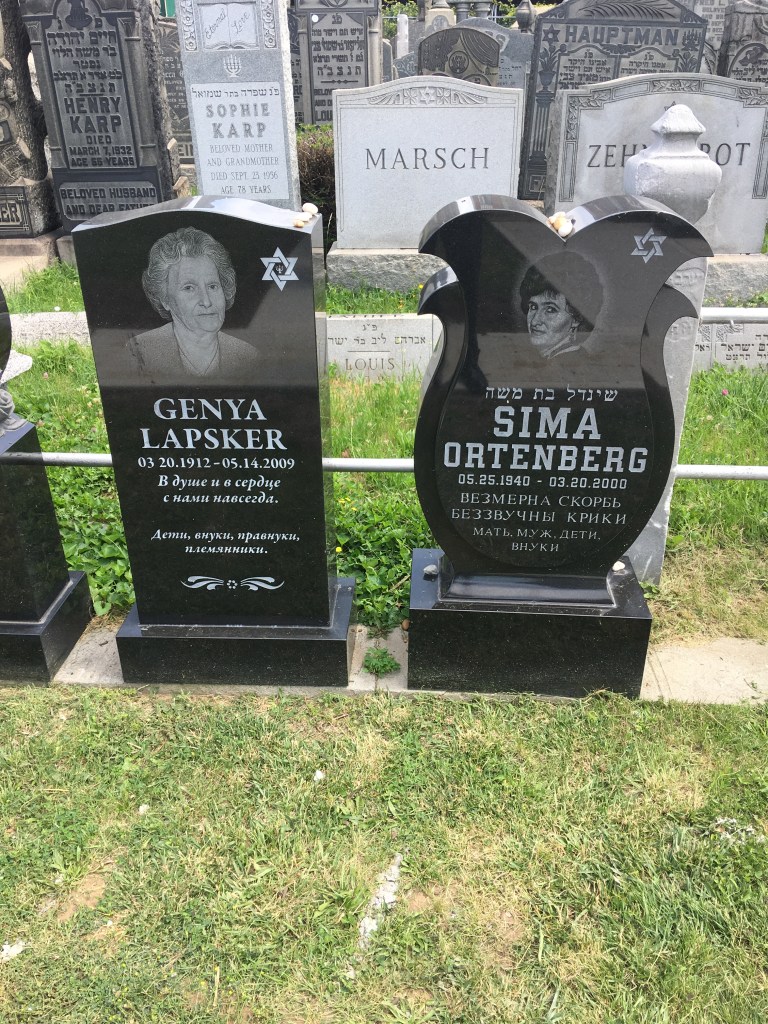
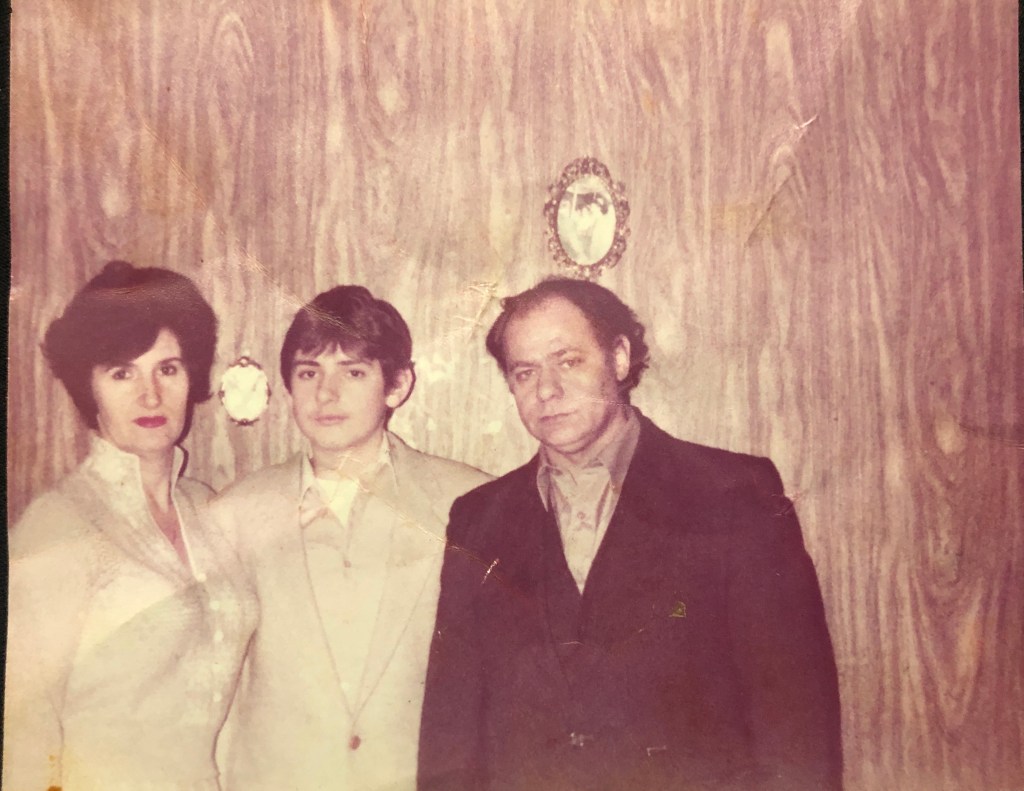
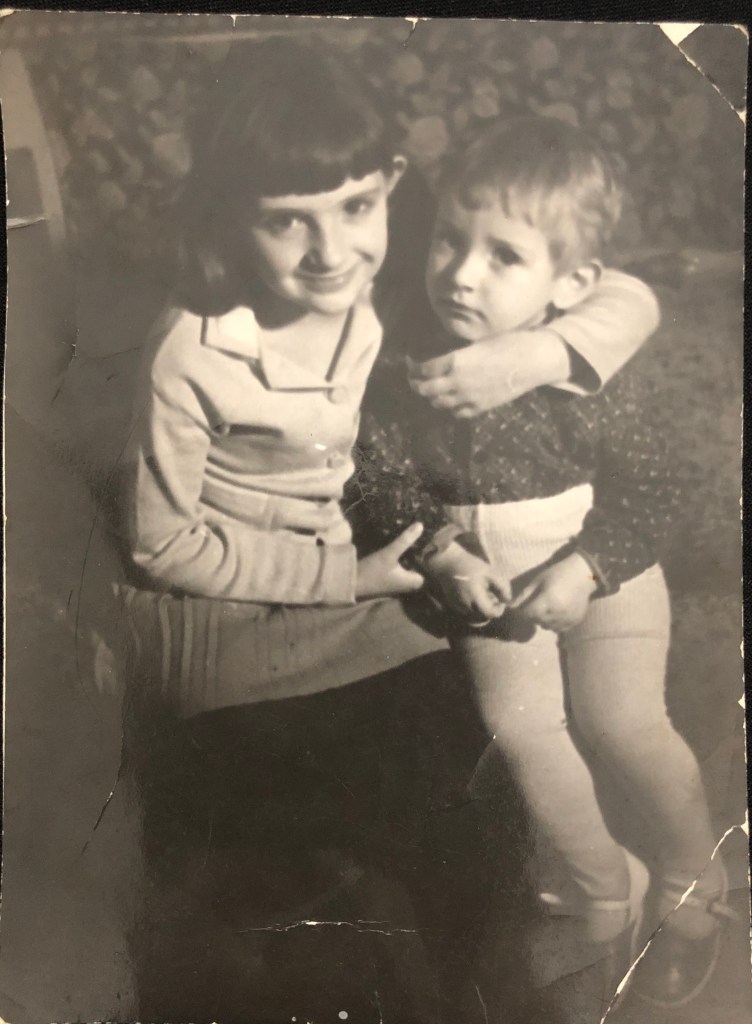
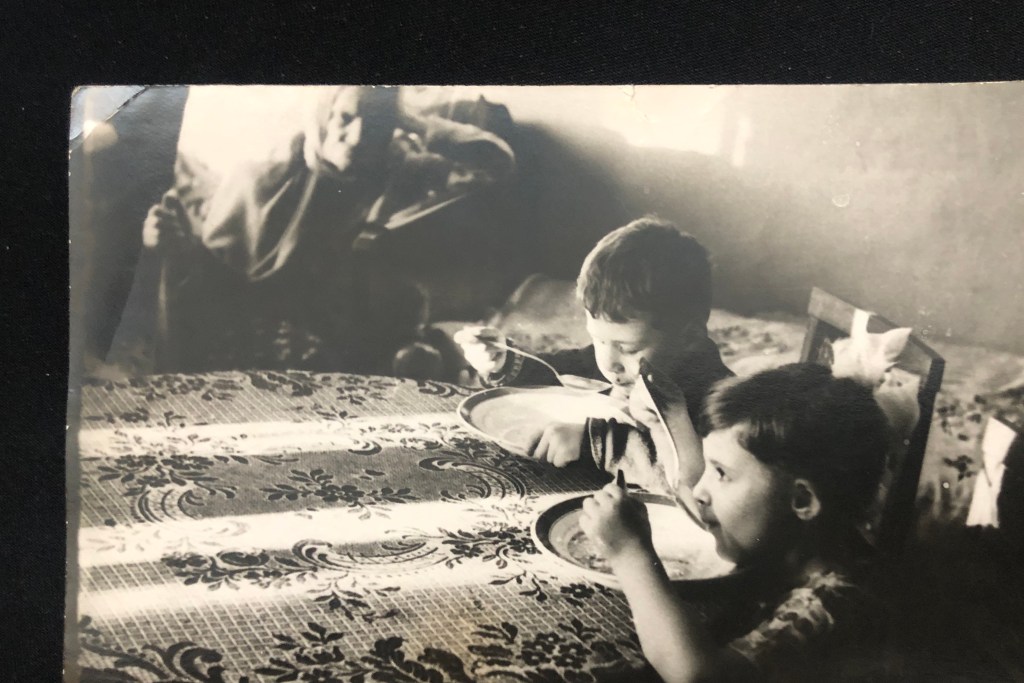
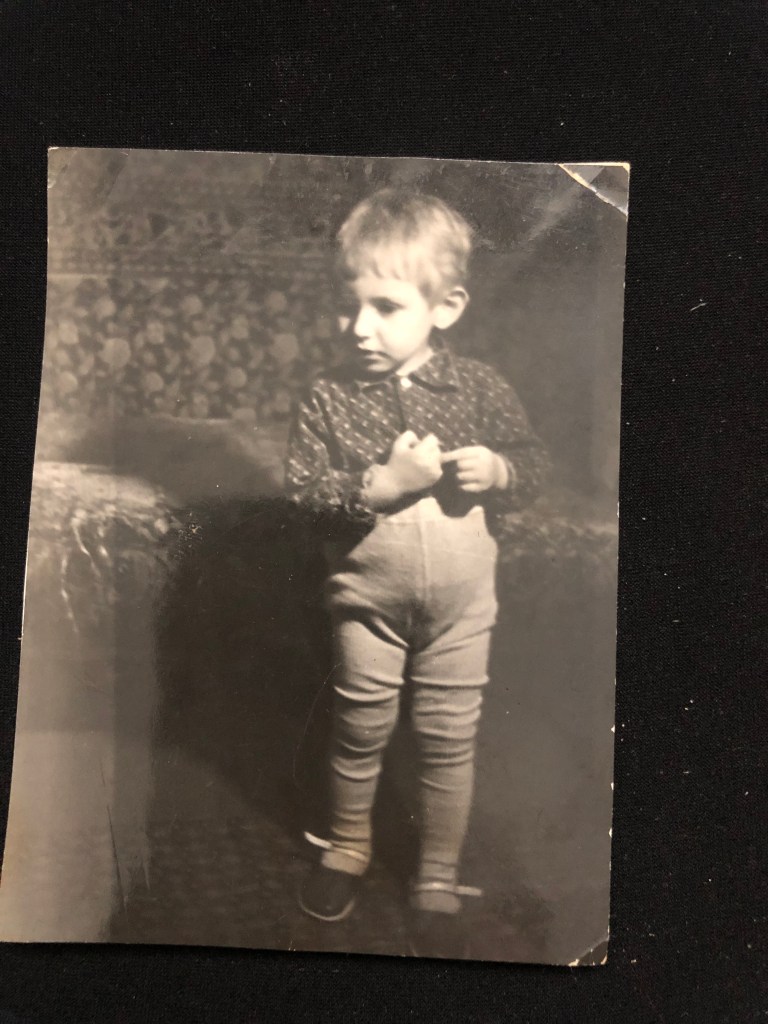
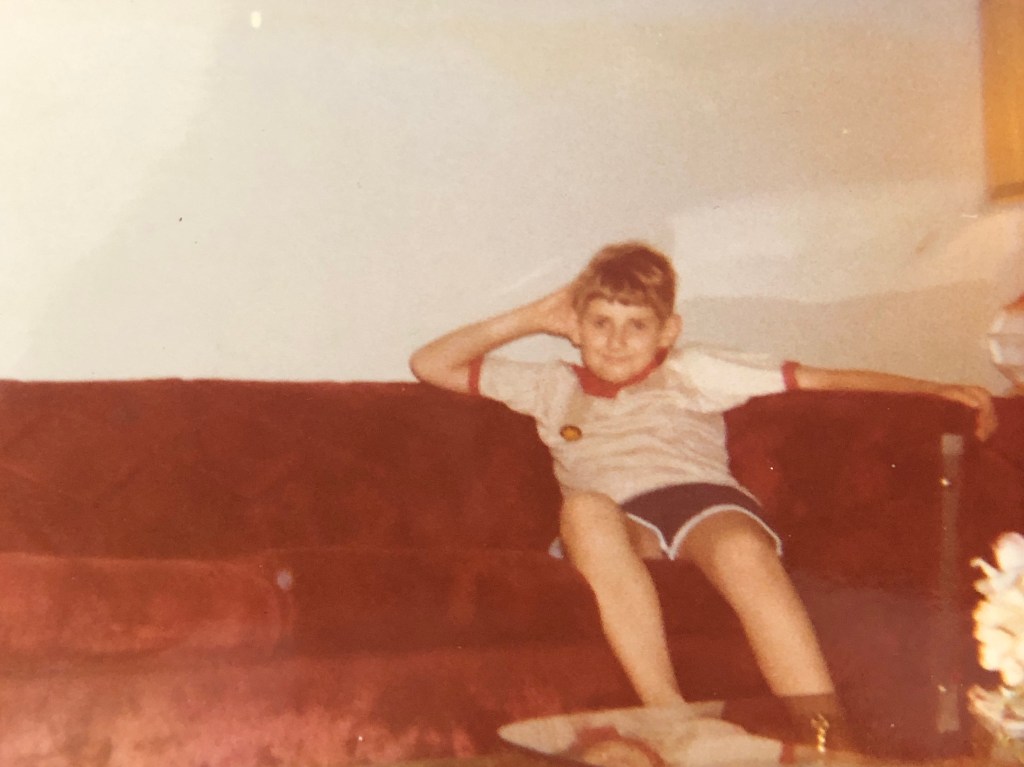
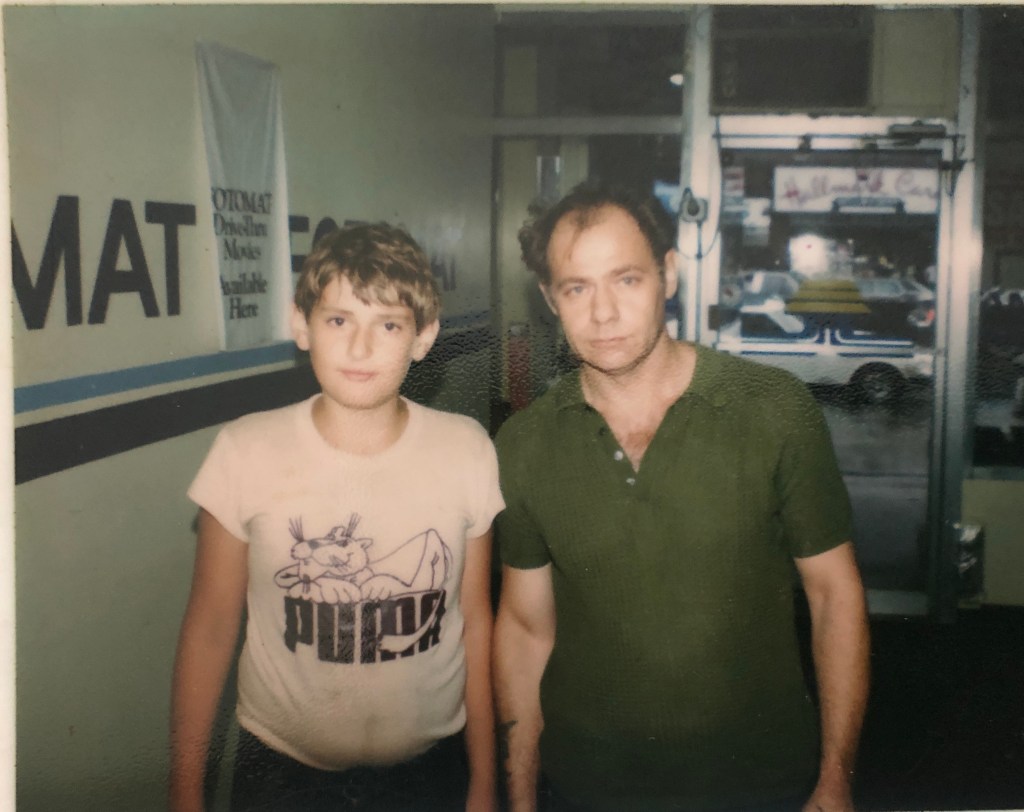
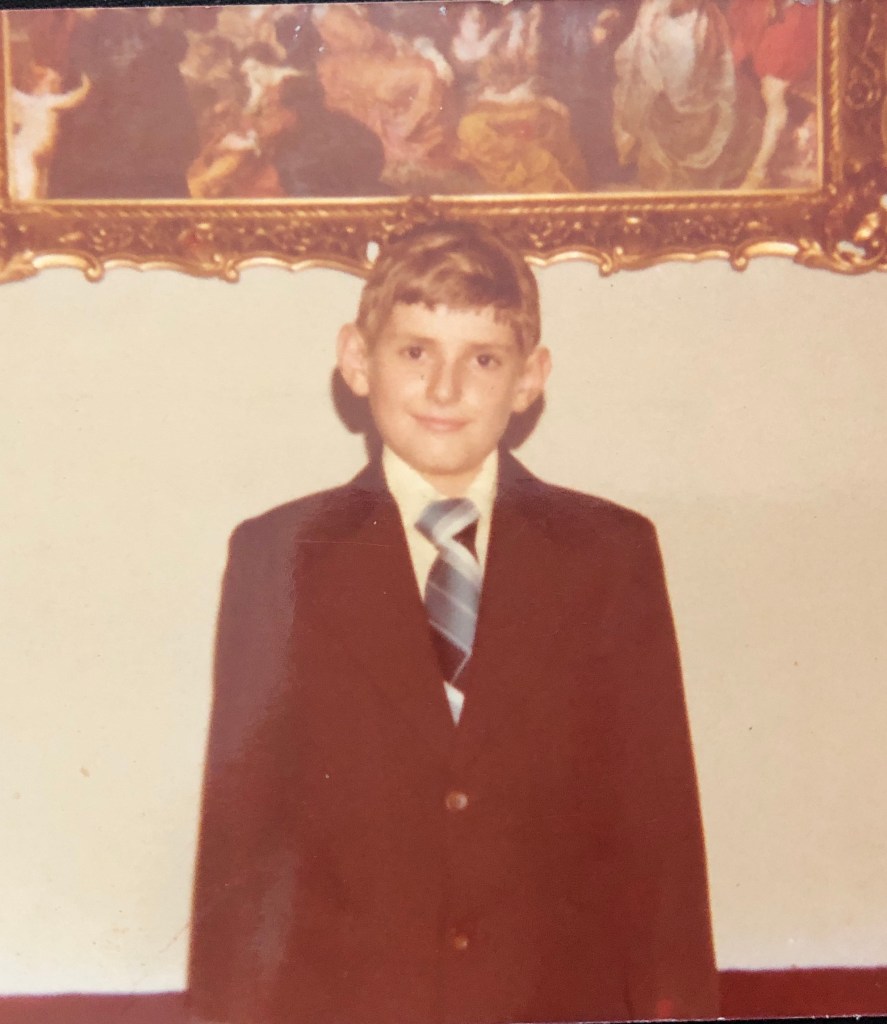
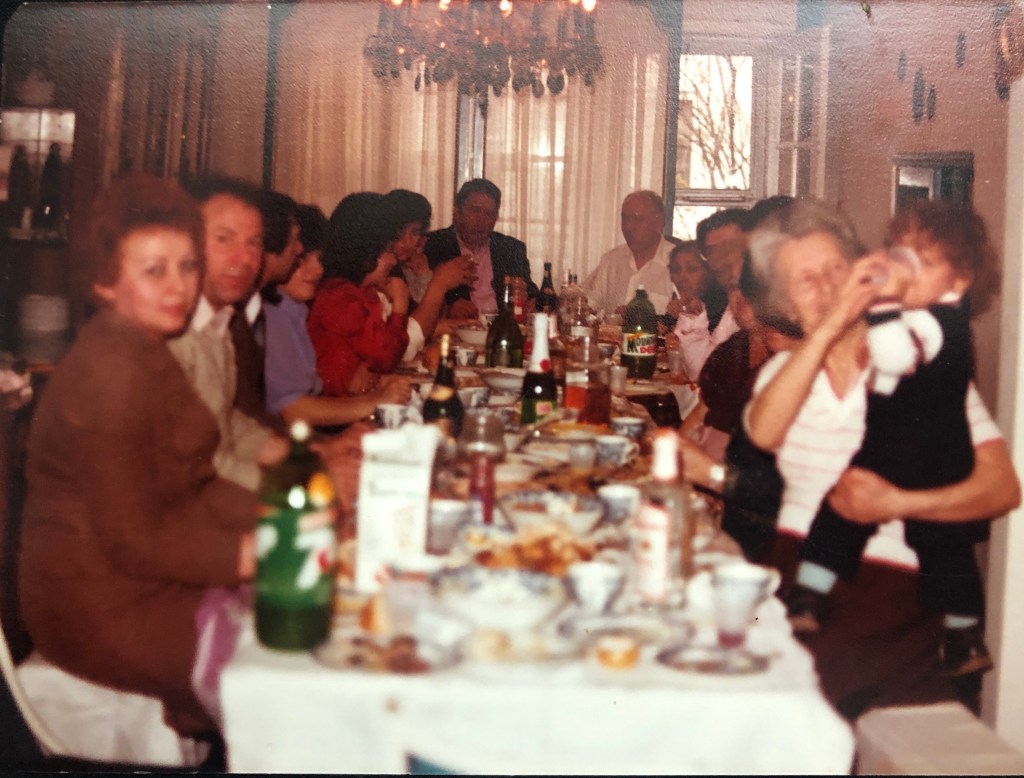
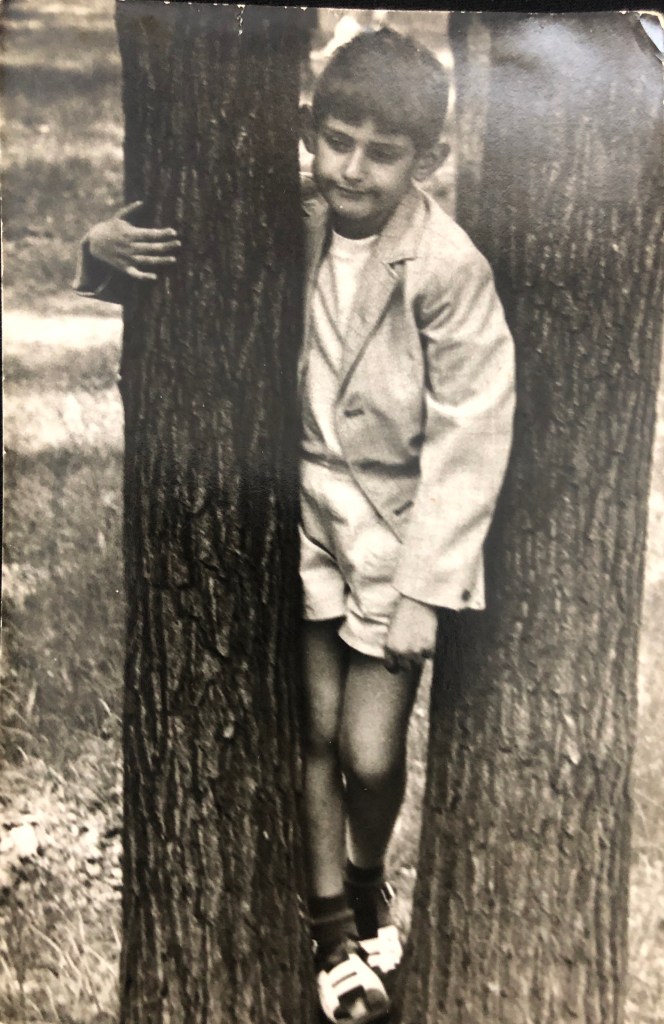
 ULTRACREPIDERIAN MUSINGS